| Citation: | XU Bingwei.Study and application of the mechanism of reducing sandstone reservoir damage by hpg with repair agent[J]. Drilling Fluid & Completion Fluid,2026, 43(2):272-279 doi: 10.12358/j.issn.1001-5620.2026.02.016

|

| [1] |
贾爱林, 位云生, 郭智, 等. 中国致密砂岩气开发现状与前景展望[J]. 天然气工业, 2022, 42(1): 83-92.
JIA Ailin, WEI Yunsheng, GUO Zhi, et al. Development status and prospect of tight sandstone gas in China[J]. Natural Gas Industry, 2022, 42(1): 83-92.
|
| [2] |
LI J C, LEI Z D, TANG H Y, et al. Efficient evaluation of gas recovery enhancement by hydraulic fracturing in unconventional reservoirs[J]. Journal of Natural Gas Science and Engineering, 2016, 35, Part A: 873-881.
|
| [3] |
何春明, 才博, 卢拥军, 等. 瓜胶压裂液携砂微观机理研究[J]. 油田化学, 2015, 32(1): 34-38.
HE Chunming, CAI Bo, LU Yongjun, et al. Microscopic mechanism of proppant carrying capacity of fracturing fluid[J]. Oilfield Chemistry, 2015, 32(1): 34-38.
|
| [4] |
BERLANGIERI C, POGGI G, MURGIA S, et al. Structural, rheological and dynamics insights of hydroxypropyl guar gel-like systems[J]. Colloids and Surfaces B: Biointerfaces, 2018, 168: 178-186. doi: 10.1016/j.colsurfb.2018.02.025
|
| [5] |
SHI P, WANG S B, WANG Z, et al. LNMR analysis of the retention of different guar gum structure in sandstone: based on a new characterization method[J]. Geoenergy Science and Engineering, 2024, 243: 213113. doi: 10.1016/j.geoen.2024.213113
|
| [6] |
YIN Z C, WANG Y L, WANG K, et al. The adsorption behavior of hydroxypropyl guar gum onto quartz sand[J]. Journal of Molecular Liquids, 2018, 258: 10-17. doi: 10.1016/j.molliq.2018.02.105
|
| [7] |
XU Z C, LI Z P, WANG C. Experimental study on microscopic formation damage of low permeability reservoir caused by HPG fracturing fluid[J]. Journal of Natural Gas Science and Engineering, 2016, 36: 486-495. doi: 10.1016/j.jngse.2016.10.063
|
| [8] |
WU X H, PU H, ZHU K A, et al. Formation damage mechanisms and protection technology for Nanpu nearshore tight gas reservoir[J]. Journal of Petroleum Science and Engineering, 2017, 158: 509-515. doi: 10.1016/j.petrol.2017.07.033
|
| [9] |
GUO T K, GONG F C, LIN Q, et al. Experimental investigation on damage mechanism of guar gum fracturing fluid to low-permeability reservoir based on nuclear magnetic resonance[J]. Journal of Energy Resources Technology, 2018, 140(7): 072906. doi: 10.1115/1.4039324
|
| [10] |
马应娴, 马乐瑶, 郭建春, 等. 低吸附耐高矿化度滑溜水体系研制与现场应用[J]. 油田化学, 2020, 37(4): 616-622.
MA Yingxian, MA Leyao, GUO Jianchun, et al. Preparation and field application of slickwater system with high salt tolerance and low adsorption[J]. Oilfield Chemistry, 2020, 37(4): 616-622.
|
| [11] |
ZHANG L F, ZHOU F J, ZHANG S C, et al. Evaluation of permeability damage caused by drilling and fracturing fluids in tight low permeability sandstone reservoirs[J]. Journal of Petroleum Science and Engineering, 2019, 175: 1122-1135. doi: 10.1016/j.petrol.2019.01.031
|
| [12] |
李杨. 羟丙基瓜尔胶对砂岩多孔介质吸附滞留伤害与解除研究[D]. 成都: 西南石油大学, 2019.
LI Yang. Adsorption and retention damage and control measures of hydroxypropyl guar gum fracturing fluid to porous medium of sandstone[D]. Chengdu: Southwest Petroleum University, 2019.
|
| [13] |
李爱芬, 任晓霞, 王桂娟, 等. 核磁共振研究致密砂岩孔隙结构的方法及应用[J]. 中国石油大学学报(自然科学版), 2015, 39(6): 92-98. doi: 10.3969/j.issn.1673-5005.2015.06.012
LI Aifen, REN Xiaoxia, WANG Guijuan, et al. Characterization of pore structure of low permeability reservoirs using a nuclear magnetic resonance method[J]. Journal of China University of Petroleum (Edition of Natural Science), 2015, 39(6): 92-98. doi: 10.3969/j.issn.1673-5005.2015.06.012
|
| [14] |
翟成, 孙勇, 范宜仁, 等. 低场核磁共振技术在煤孔隙结构精准表征中的应用与展望[J]. 煤炭学报, 2022, 47(2): 828-848. doi: 10.13225/j.cnki.jccs.XR21.1766
ZHAI Cheng, SUN Yong, FAN Yiren, et al. Application and prospect of low-field nuclear magnetic resonance technology in accurate characterization of coal pore structure[J]. Journal of China Coal Society, 2022, 47(2): 828-848. doi: 10.13225/j.cnki.jccs.XR21.1766
|
| [15] |
王琨, 周航宇, 赖杰, 等. 核磁共振技术在岩石物理与孔隙结构表征中的应用[J]. 仪器仪表学报, 2020, 41(2): 101-114. doi: 10.19650/j.cnki.cjsi.J1905872
WANG Kun, ZHOU Hangyu, LAI Jie, et al. Application of NMR technology in characterization of petrophysics and pore structure[J]. Chinese Journal of Scientific Instrument, 2020, 41(2): 101-114. doi: 10.19650/j.cnki.cjsi.J1905872
|
| [16] |
陈鸿林. 低渗透油藏多段压裂开发优化研究[D]. 青岛: 中国石油大学(华东), 2018.
CHEN Honglin. The optimization research of multiple-fracturing wellsdevelopment in low permeability reservoir[D]. Qingdao: China University of Petroleum, 2018.
|
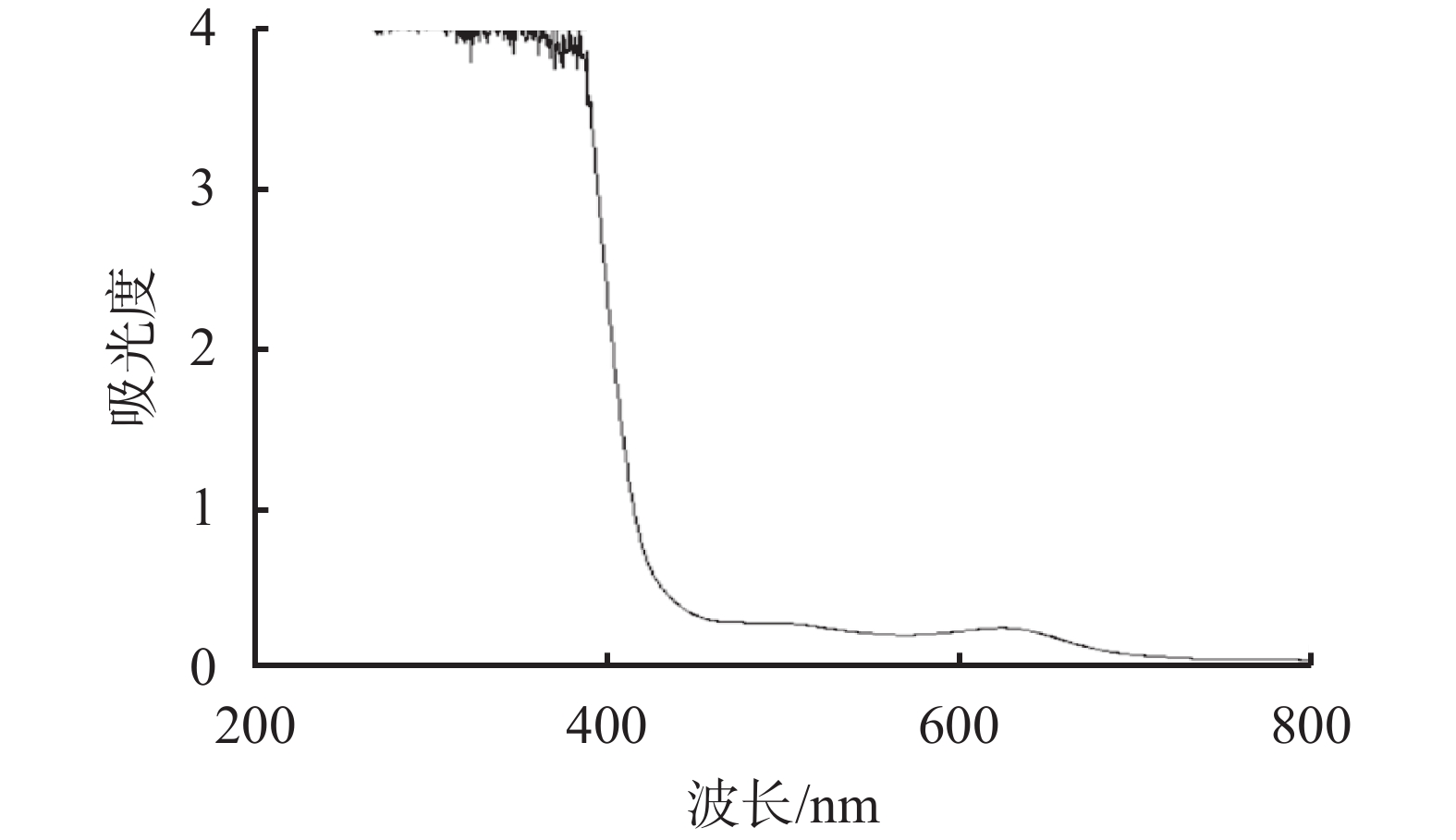
Figures(9) / Tables(4)
Website Copyright Drilling Fluid & Completion Fluid津ICP备13002319号-1
Address:Room A517, China Petroleum Tianjin Building, No. 83, Second Avenue, Tianjin Economic and Technological Development Zone
Tel:022-65278734022-25275527Email:zjyywjy@126.comPost Code:300457
Supported by:
Beijing Renhe Information Technology Co., Ltd.




 DownLoad: