



CFD-DEM-Based Study on Particle-Size Matching of Bridging Particles in Multi-Scale Fractures
-
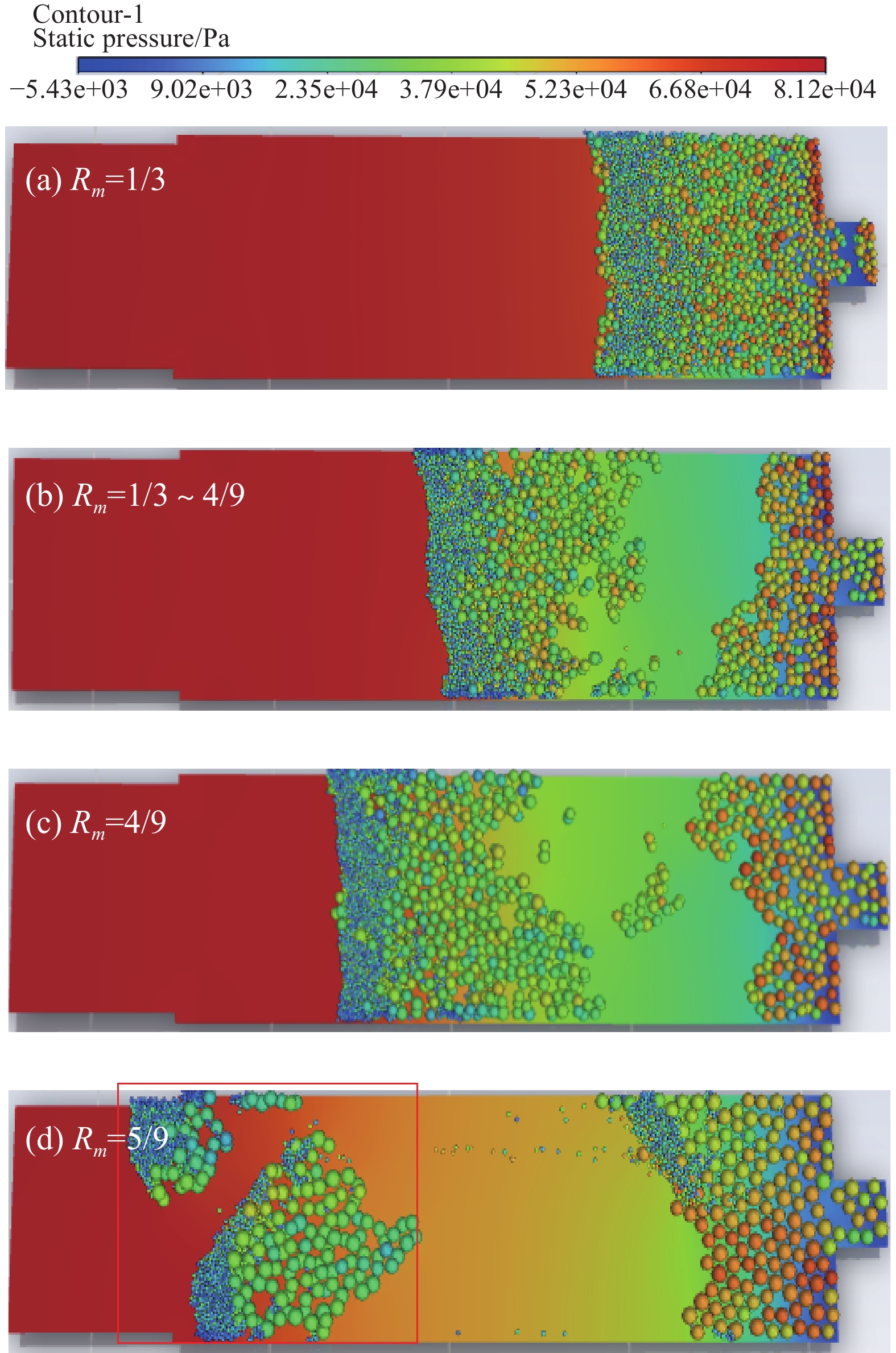
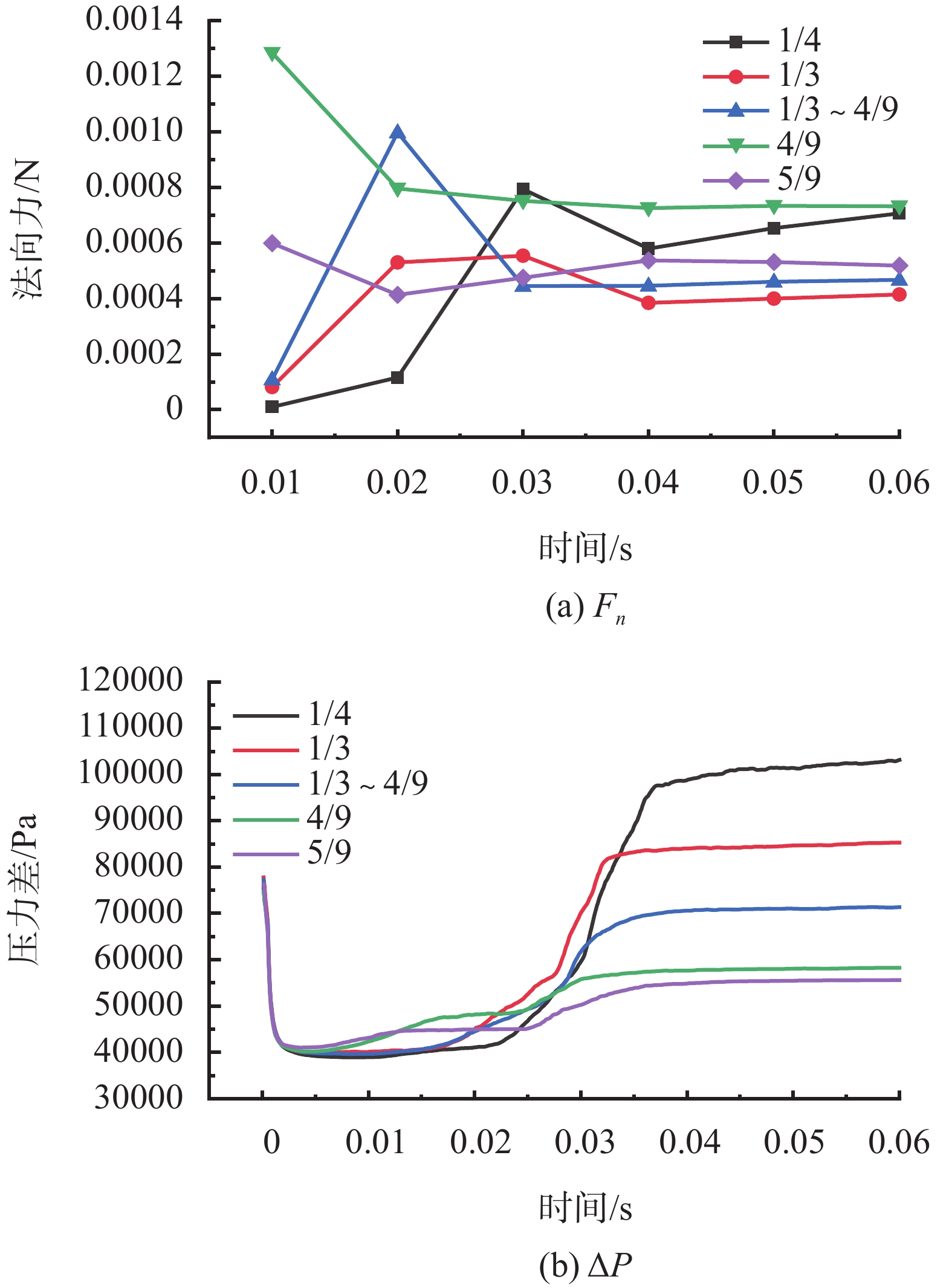
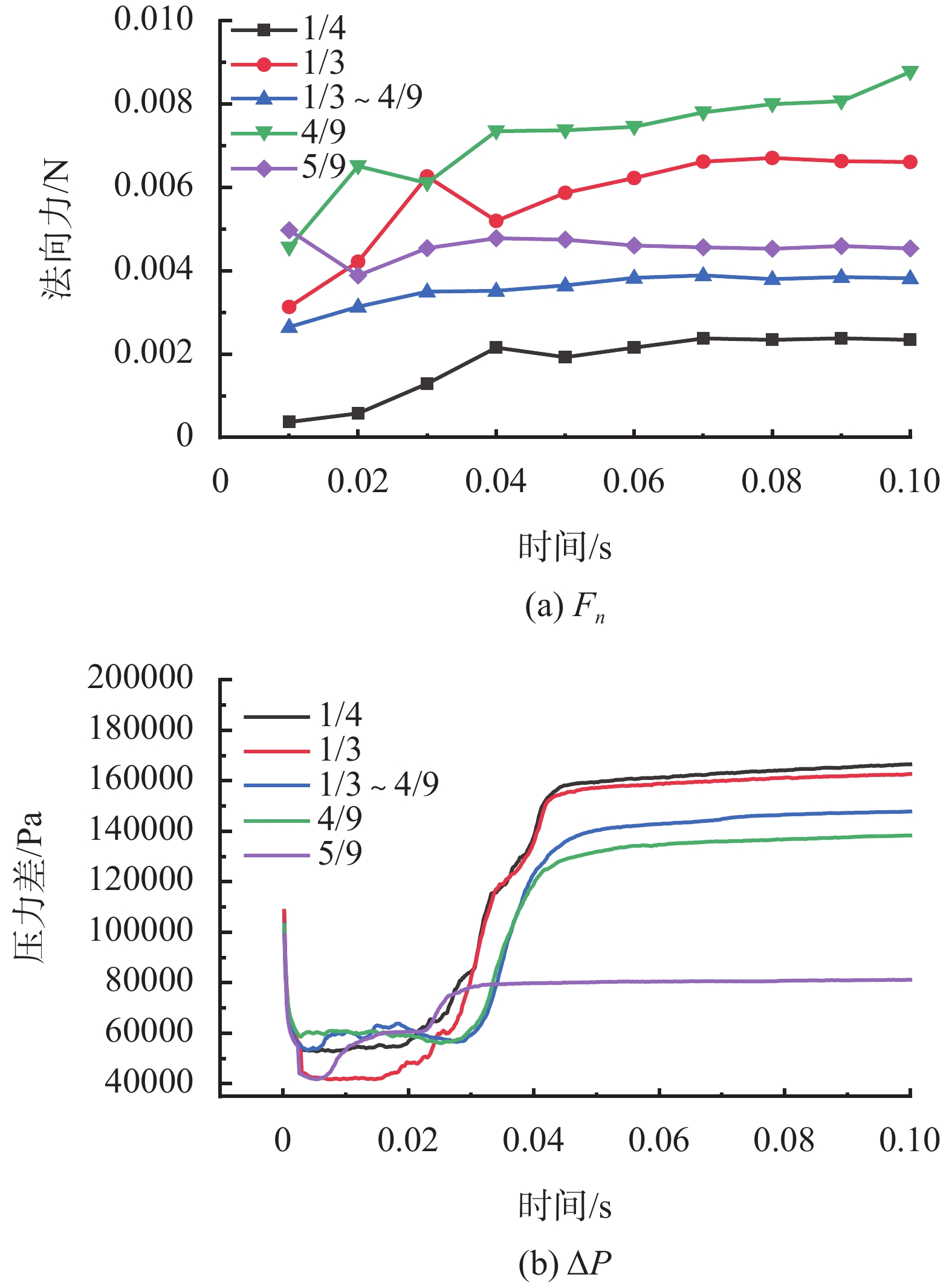
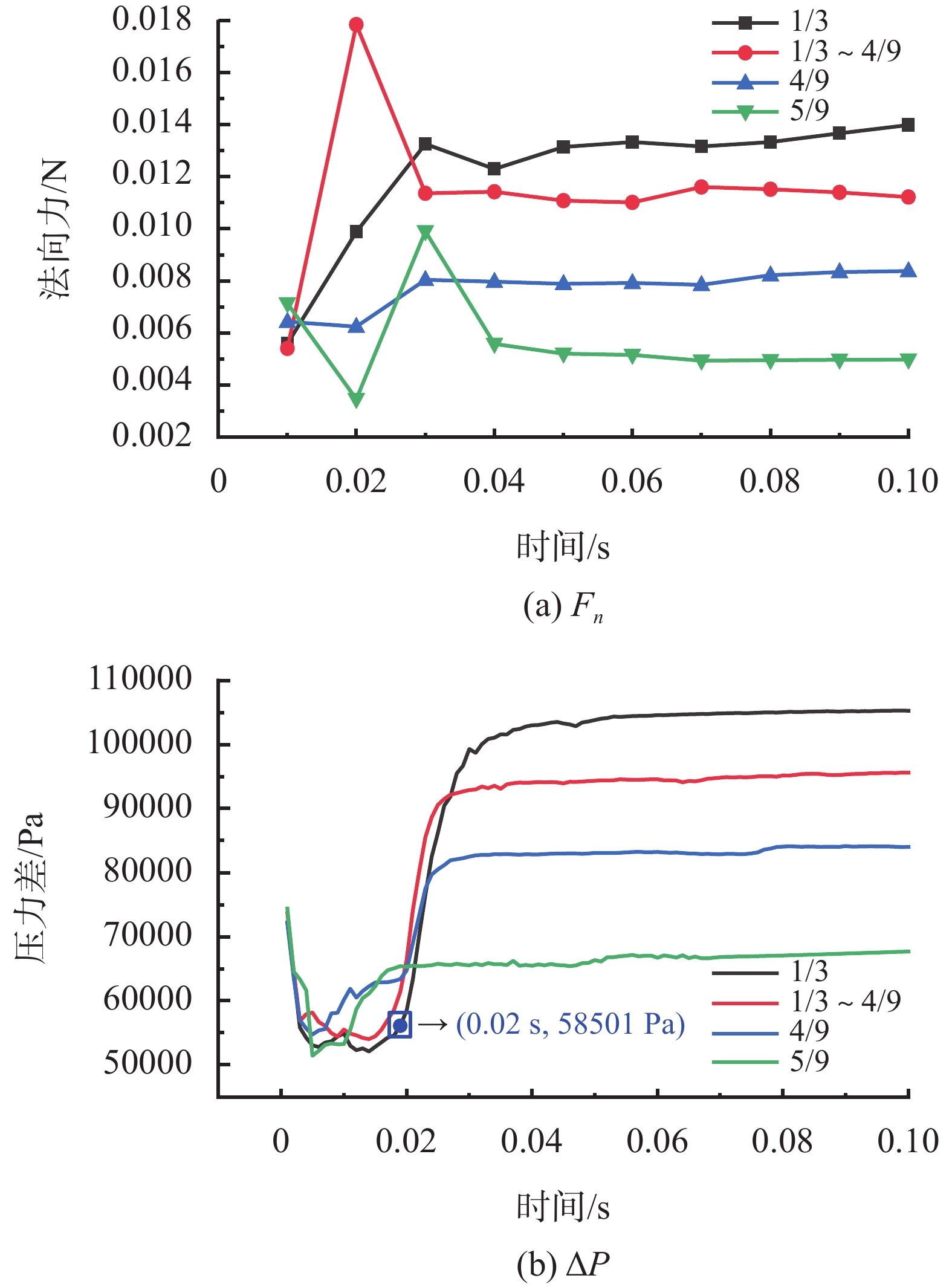
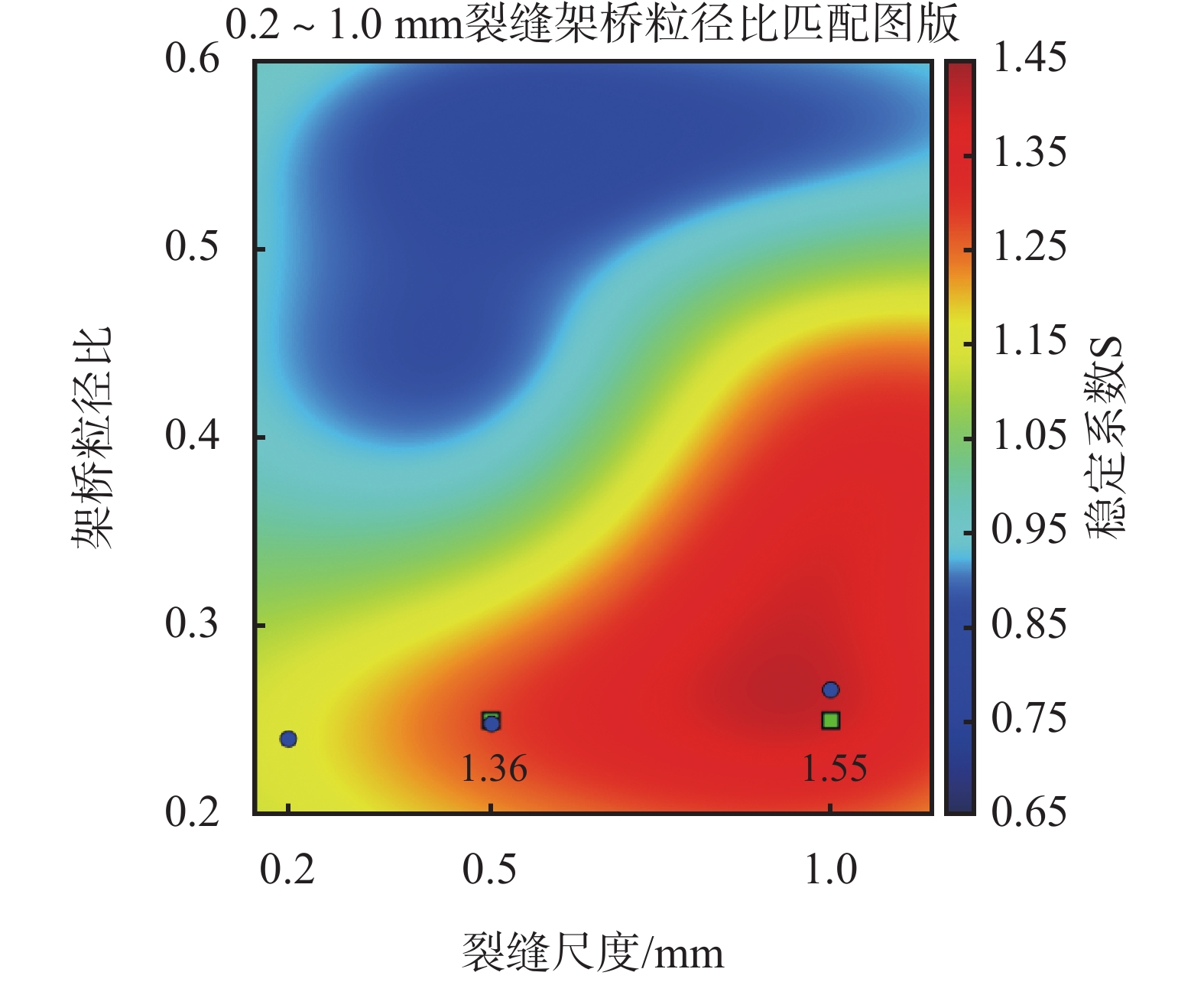
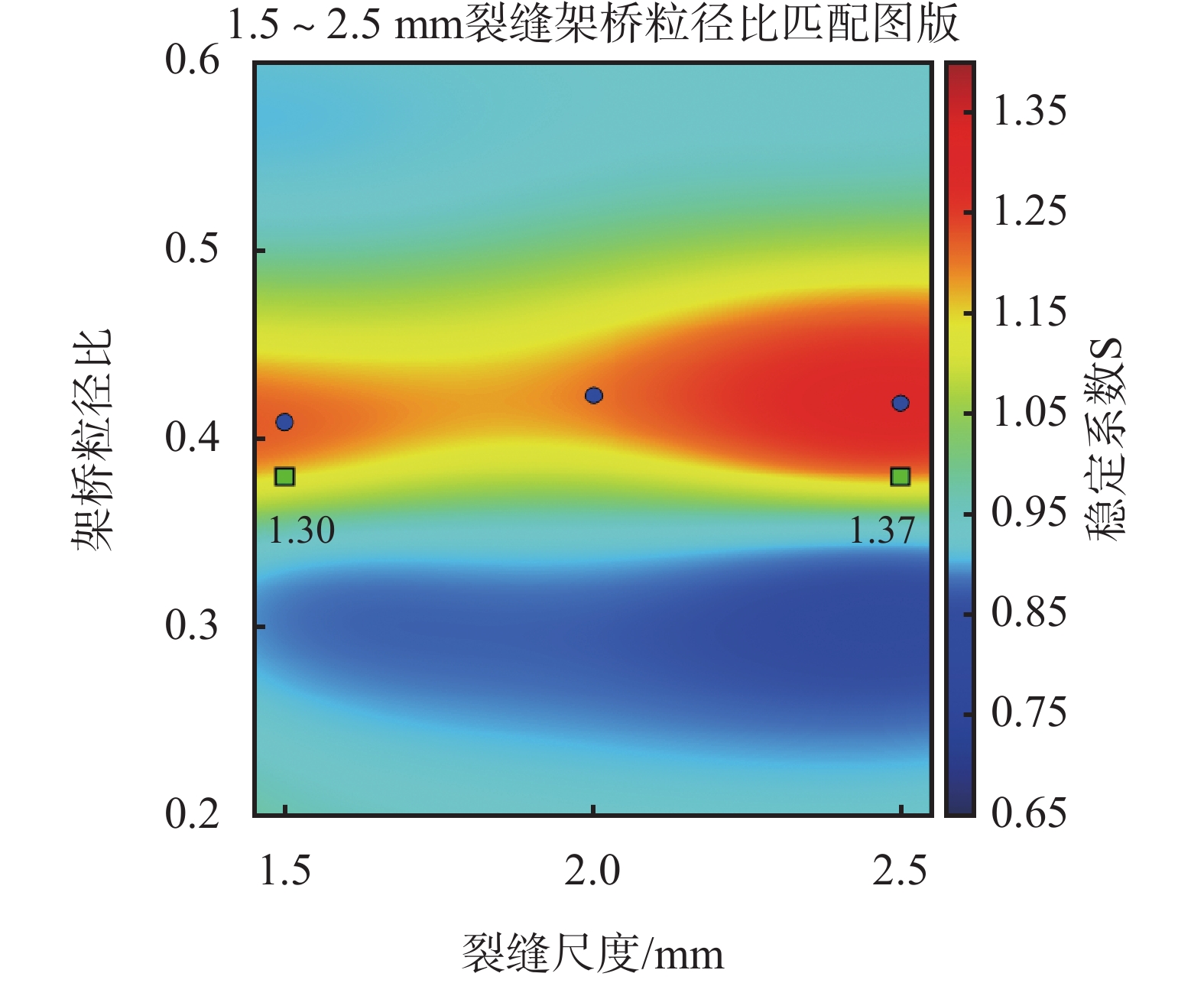
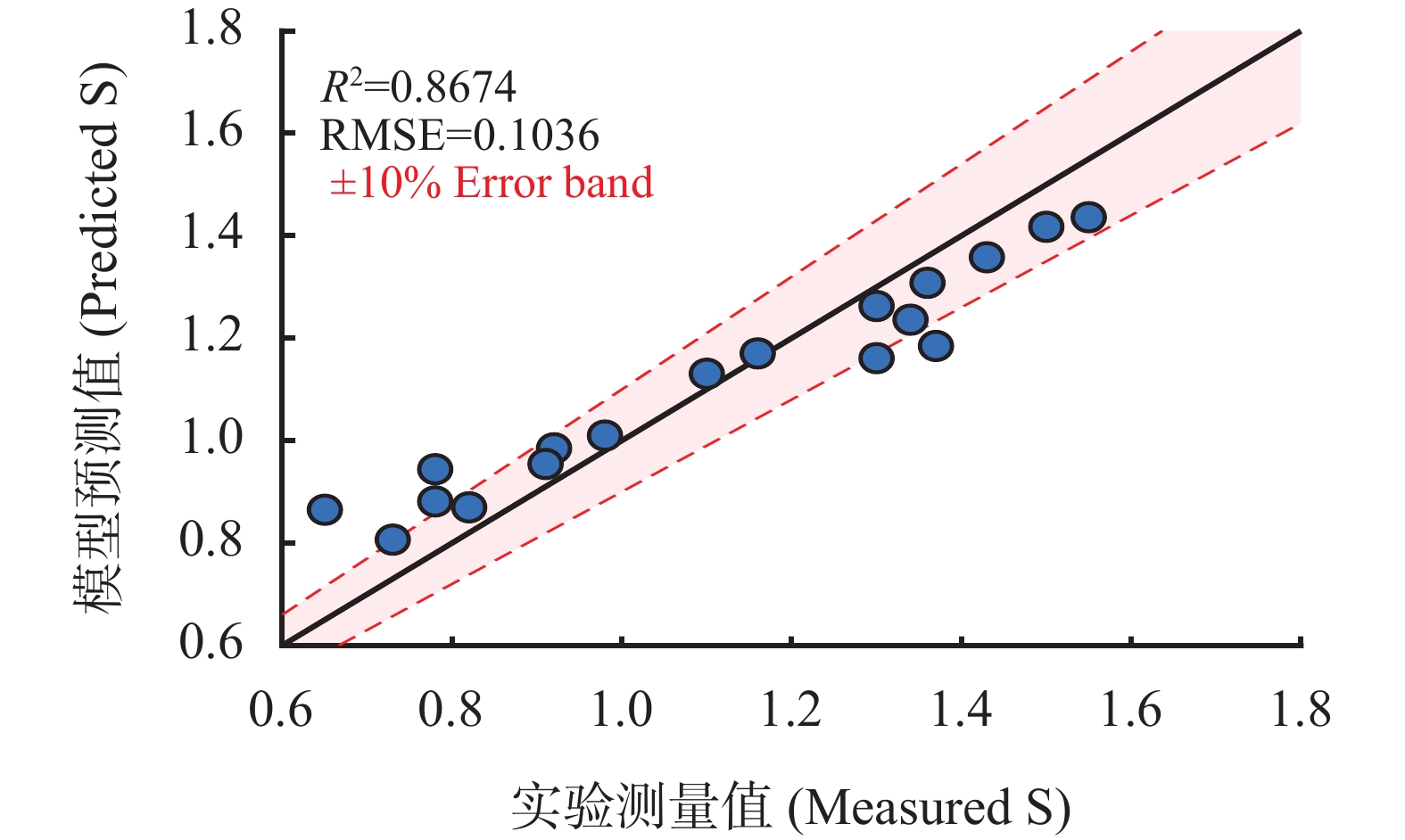
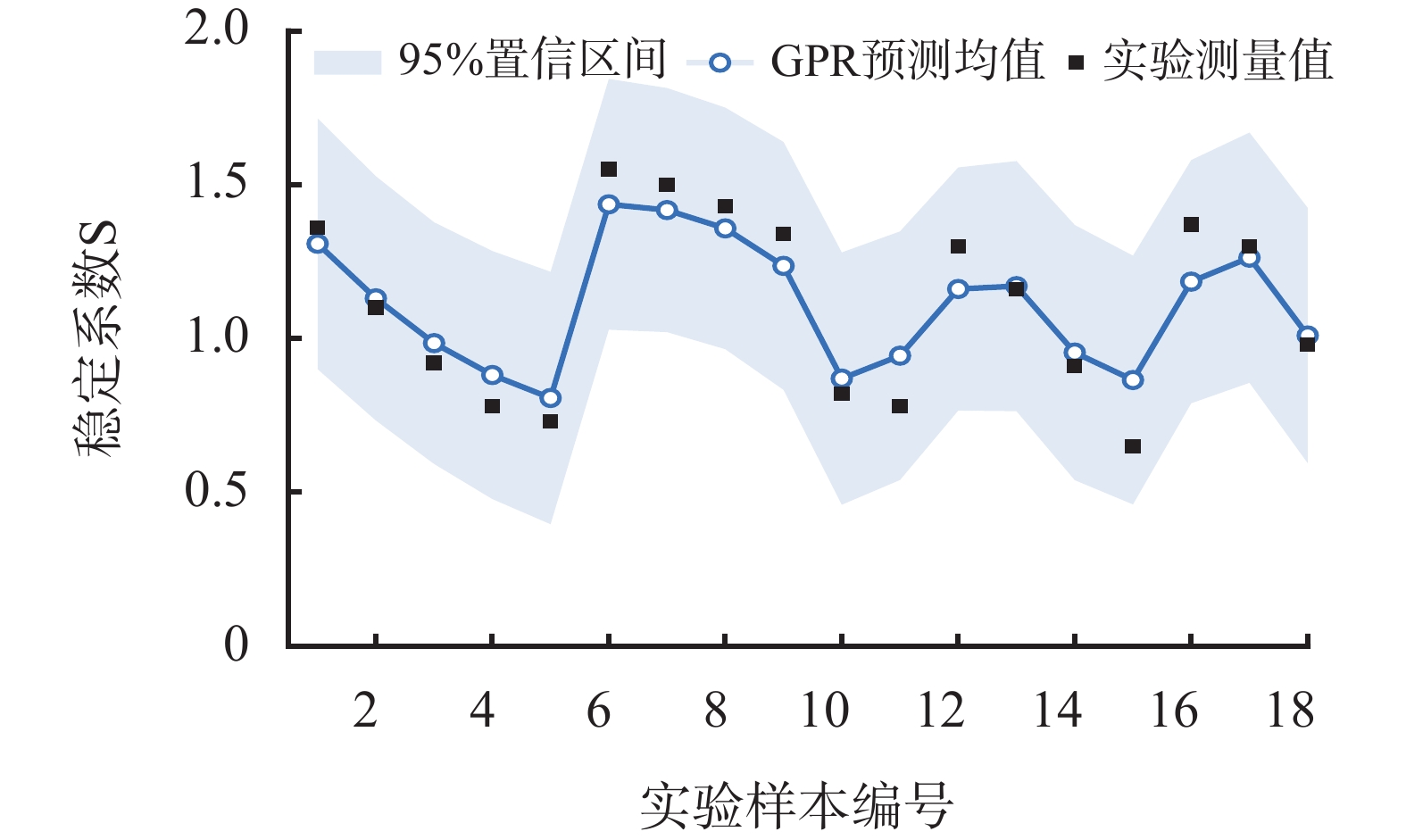
摘要: 针对传统的颗粒粒径匹配规则难以适应多尺度裂缝性地层堵漏的问题,选取多尺度楔形裂缝为研究对象,开展了计算流体力学-离散元法(CFD-DEM)耦合模拟,并结合室内裂缝封堵模拟评价实验,分析了裂缝开度变化下的架桥颗粒粒径匹配特征;基于压差响应构建无量纲稳定系数S,并采用高斯过程回归(GPR)方法建立稳定系数S关于裂缝开度和架桥粒径比的响应关系,形成了多尺度裂缝架桥粒径比匹配图版。研究表明:在0.2~2.5 mm裂缝尺度范围内,不同裂缝尺度下颗粒堵层形态和承压响应存在明显差异,当粒径比处于适宜区间时,颗粒能够在裂缝内部形成较稳定的架桥堆积带,并表现出较高的承压能力;粒径比偏小时颗粒易发生深部运移或冲刷失稳,粒径比偏大时易在裂缝入口端形成虚堵。架桥颗粒适宜粒径比随裂缝开度增大呈现区间迁移特征,0.2~1 mm裂缝对应优选粒径比区间为0.25~0.40,1.5~2.5 mm裂缝对应优选粒径比区间为0.35~0.45。所建图版能够反映出不同裂缝尺度下适宜粒径比区间的分布及迁移规律,图版计算结果与实验数据整体趋势一致,决定系数R2为0.8674,表明该图版在研究范围内具有较好的拟合精度。传统的颗粒匹配规则在多尺度裂缝条件下存在适用性边界,稳定系数S可用于不同裂缝尺度下封堵效果的相对评价,所建图版可为裂缝性地层堵漏材料粒径优选提供参考。Abstract: To address the limitation of traditional particle-size matching rules in lost circulation control for multi-scale fractured formations, coupled CFD-DEM simulations and laboratory simulated fracture-plugging evaluation experiments were performed on multi-scale wedge-shaped fractures. A dimensionless stability coefficient S was defined from the pressure-drop response. Gaussian process regression (GPR) was then used to establish the response relationship of S with fracture aperture and bridging particle-size ratio, forming a particle-size matching chart for multi-scale fractures. The results show that particle plugging-layer morphology and pressure-bearing response vary with fracture size. Suitable particle-size ratios allow bridging particles to form stable packing zones inside fractures and exhibit high pressure-bearing capacity, whereas smaller or larger ratios lead to deep migration, erosion-induced instability, or false plugging at the fracture inlet. The preferred particle-size ratio is 0.25-0.40 for 0.2-1 mm fractures and 0.35-0.45 for 1.5-2.5 mm fractures. The chart agrees with experimental data, with R2=0.8674, indicating good fitting accuracy within the research range.
-
Key words:
- CFD-DEM /
- Multi-scale fracture /
- Bridging plugging /
- Particle-size matching /
- Chart representation
-
表 1 液-固两相及模型参数
参数 单位 数值 颗粒相 泊松比 - 0.23 剪切模量 Pa 1.2×10⁶ 恢复系数 - 0.5 静摩擦系数 - 0.6 滚动摩擦系数 - 0.1 液相 密度 kg/m3 1200 黏度 mPa·s 45 模型 粗糙度 mm 0.02  下载: 导出CSV
表 2 数值模拟方案矩阵
序号 裂缝入口开度w/mm 架桥粒径比 流速/(m/s) 1 0.5 1/4 0.5 2 0.5 1/3 0.5 3 0.5 1/3~4/9 0.5 4 0.5 4/9 0.5 5 0.5 5/9 0.5 6 1.0 1/4 1.0 7 1.0 1/3 1.0 8 1.0 1/3~4/9 1.0 9 1.0 4/9 1.0 10 1.0 5/9 1.0 11 1.5 1/3 1.5 12 1.5 1/3~4/9 1.5 13 1.5 4/9 1.5 14 1.5 5/9 1.5 15 2.5 1/3 2.5 16 2.5 1/3~4/9 2.5 17 2.5 4/9 2.5 18 2.5 5/9 2.5
下载: 导出CSV
表 3 堵漏材料参数
堵漏材料 主要作用 粒径确定方式 摩擦系数
范围核桃壳 主架桥颗粒 筛分获取粒径范围 0.2~0.3 纤维 协同架桥与填充 筛分获取粒径范围 0.1~0.2 超细碳酸钙 细颗粒填充 1250目 0.2~0.3
下载: 导出CSV
表 4 室内实验数据对比
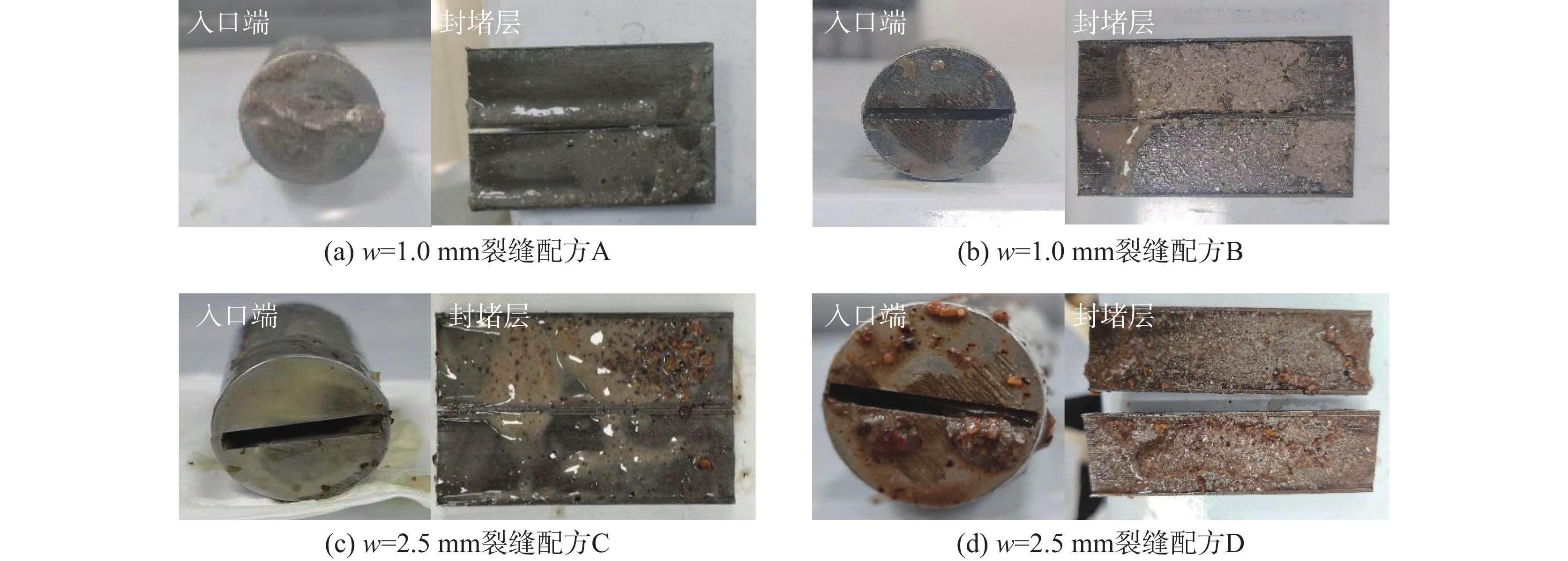
裂缝尺度 实验组别 堵漏浆配方 封堵效果 w=1 mm 配方A 4%核桃壳(0.45~0.55 mm)+ 1.5%纤维(0.18~0.22 mm)+ 0.6%超细碳酸钙(1250目) 发生浅层虚堵,漏失量35 mL,承压仅为4 MPa 配方B 4%核桃壳(0.32~0.45 mm)+1.5%纤维(0.13~0.18 mm)+ 0.6%超细碳酸钙(1250目) 漏失量在40 mL以内,承压能力可达8 MPa w=2.5 mm 配方C 4%核桃壳(0.75~0.90 mm)+ 1.5%纤维(0.30~0.38 mm)+ 0.6%超细碳酸钙(1250目) 承压约2 MPa,漏失量超80 mL 配方D 4%核桃壳(0.8~1.11 mm)+ 1.5%纤维(0.33~0.45 mm)+ 0.6%超细碳酸钙(1250目) 漏失量降低至50 mL,承压能力可达7 MPa
下载: 导出CSV
-
[1] 蒋炳, 严君凤, 张统得. HTD-3型高温堵漏材料研制及性能评价[J]. 钻探工程, 2022, 49(1): 57-63.Jiang Bing, Yan Junfeng, Zhang Tongde. Development and performance evaluation of HTD-3 high temperature plugging material[J]. Drilling Engineering, 2022, 49(1): 57-63. [2] 艾昆. 东胜气田锦30井区下石盒子组裂缝诊断及堵漏对策[J]. 当代化工研究, 2025(12): 105-107. doi: 10.20087/j.cnki.1672-8114.2025.12.034Ai Kun. Diagnosis and leak prevention technology for cracks in the lower Shihezi formation of the Jin 30 well area in Dongsheng gas field[J]. Modern Chemical Research, 2025(12): 105-107. doi: 10.20087/j.cnki.1672-8114.2025.12.034 [3] 谢坤, 程前, 刘长龙, 等. 油气田刺激响应性材料应用现状及前景展望[J]. 精细化工, 2024, 41(7): 1478-1493, 1518.Xie Kun, Cheng Qian, Liu Changlong, et al. Application status and prospects of stimuli-responsive materials in oil and gas fields[J]. Fine Chemicals, 2024, 41(7): 1478-1493,1518. [4] 汪海阁, 乔磊, 杨雄, 等. 中石油页岩油气工程技术现状及发展建议[J]. 石油学报, 2024, 45(10): 1552-1564.Wang Haige, Qiao Lei, Yang Xiong, et al. Current status and development recommendations for CNPC's shale oil and gas engineering technology[J]. Acta Petrolei Sinica, 2024, 45(10): 1552-1564. [5] Abrams A. Mud design to minimize rock impairment due to particle invasion[J]. Journal of Petroleum Technology, 1977, 29(5): 586-592. [6] 黄立新, 罗平亚. 裂缝性储集层的屏蔽式暂堵技术[J]. 江汉石油学院学报, 1993(3): 53-57.Huang Lixin, Luo Pingya. Shielded temporary plugging technology for fractured reservoirs[J]. Journal of Jianghan Petroleum Institute (Social Science Edition), 1993(3): 53-57. [7] Hands N, Kowbel K, Maikranz S, et al. Drill-in fluid reduces formation damage, increases production rates[J]. Oil and Gas Journal, 1998, 96(28): 65. [8] 崔迎春. 裂缝性储层屏蔽暂堵分形理论的研究[J]. 天然气工业, 2002, 22(2): 45-47.Cui Yingchun. Research on the shielding temporary plugging fractal theory of fractured reservoirs[J]. Natural Gas Industry, 2002, 22(2): 45-47. [9] 许成元, 张敬逸, 康毅力, 等. 裂缝封堵层结构形成与演化机制[J]. 石油勘探与开发, 2021, 48(1): 202-210.Xu Chengyuan, Zhang Jingyi, Kang Yili, et al. Structural formation and evolution mechanisms of fracture plugging zone[J]. Petroleum Exploration and Development, 2021, 48(1): 202-210. [10] Lin Chong, Taleghani A D, Kang Yili, et al. A coupled CFD-DEM numerical simulation of formation and evolution of sealing zones[J]. Journal of Petroleum Science and Engineering, 2022, 208: 109765. [11] 闫霄鹏, 邓嵩, 彭浩平, 等. 裂缝地层多粒径刚性颗粒封堵离散元模拟[J]. 常州大学学报(自然科学版), 2024, 36(6): 12-18.Yan Xiaopeng, Deng Song, Peng Haoping, et al. Discrete element simulation of multi-sized rigid particles plugging mechanism in fractured formation[J]. Journal of ChangZhou University (Natural Science Edition), 2024, 36(6): 12-18. [12] 孔二伟, 王利锋, 韩子辰, 等. 裂缝型漏失地层钻井液防漏堵漏数值模拟研究[J]. 钻探工程, 2025, 52(4): 46-53.Kong Erwei, Wang Lifeng, Han Zichen, et al. Numerical simulation study on leakage prevention and sealing of fractured formation drilling fluids[J]. Drilling Engineering, 2025, 52(4): 46-53. [13] Lin Chong, Xu Qicong, Han Liexiang, et al. Fracture sealing performance of granular lost circulation materials at elevated temperature: A theoretical and coupled CFD-DEM simulation study[J]. Petroleum Science, 2024, 21(1): 567-581. [14] Meng Qingsheng, Liu Yongsheng, Cheng Wenbo, et al. Plugging mechanism of preformed particle gels in fractured formation: Fracture plugging simulation[J]. Geoenergy Science and Engineering, 2025, 255: 214119. [15] 李洁, 冯奇, 张高峰, 等. 介观尺度下裂缝内堵漏颗粒封堵层形成与破坏机理CFD-DEM 模拟[J]. 钻井液与完井液, 2022, 39(6): 721-729.Li Jie, Feng Qi, Zhang Gaofeng, et al. CDF-DEM simulation of the formation and failure mechanisms of plugging layers formed by plugging particles in fractures at mesoscale[J]. Drilling Fluid & Completion Fluid, 2022, 39(6): 721-729. [16] 王羽歌, 苏丹丹, 田永军, 等. 破碎带地层堵漏剂性能及堵漏机理研究[J]. 应用化工, 2025, 54(9): 2303-2309, 2315.Wang Yuge, Su Dandan, Tian Yongjun, et al. The performance and plugging mechanism of plugging agent in fractured zone formation[J]. Applied Chemical Industry, 2025, 54(9): 2303-2309,2315. [17] 许成元, 阳洋, 蒲时, 等. 基于高效架桥和致密填充的深层裂缝性储层堵漏配方设计方法研究[J]. 油气藏评价与开发, 2022, 12(3): 534-544.Xu Chengyuan, Yang Yang, Pu Shi, et al. Design method of plugging formula for deep naturally fractured reservoir based on efficient bridging and compact filling[J]. Reservoir Evaluation and Development, 2022, 12(3): 534-544. [18] 张世锋, 王相, 崔新颖, 等. 基于改进理想充填理论的堵漏颗粒粒度分布设计方法[J]. 常州大学学报(自然科学版), 2021, 33(3): 54-59.Zhang Shifeng, Wang Xiang, Cui Xinying, et al. Modified ideal packing theory to optimize size distribution of plugging particle for fracture lost circulation control[J]. Journal of ChangZhou University (Natural Science Edition), 2021, 33(3): 54-59. [19] 雷少飞, 孙金声, 白英睿, 等. 裂缝封堵层形成机理及堵漏颗粒优选规则[J]. 石油勘探与开发, 2022, 49(3): 597-604.Lei Shaofei, Sun Jinsheng, Bai Yingrui, et al. Formation mechanisms of fracture plugging zone and optimization of plugging particles[J]. Petroleum Exploration and Development, 2022, 49(3): 597-604. [20] 张帅. 多尺度裂缝性地层漏失机理及堵漏配方研究[D]. 北京: 中国石油大学(北京), 2023.Zhang Shuai. Study on lost circulation mechanism and control formulation in multi-scale fracture formation[D]. Beijing: China University of Petroleum (Beijing), 2023. -

 点击查看大图
图(17) / 表(4)
计量
- 文章访问数: 22
- HTML全文浏览量: 13
- PDF下载量: 1
- 被引次数: 0
