



Development and Mechanism of a Bio-Based Water-Blocking Prevention Workover Fluid for Offshore Oilfields
-
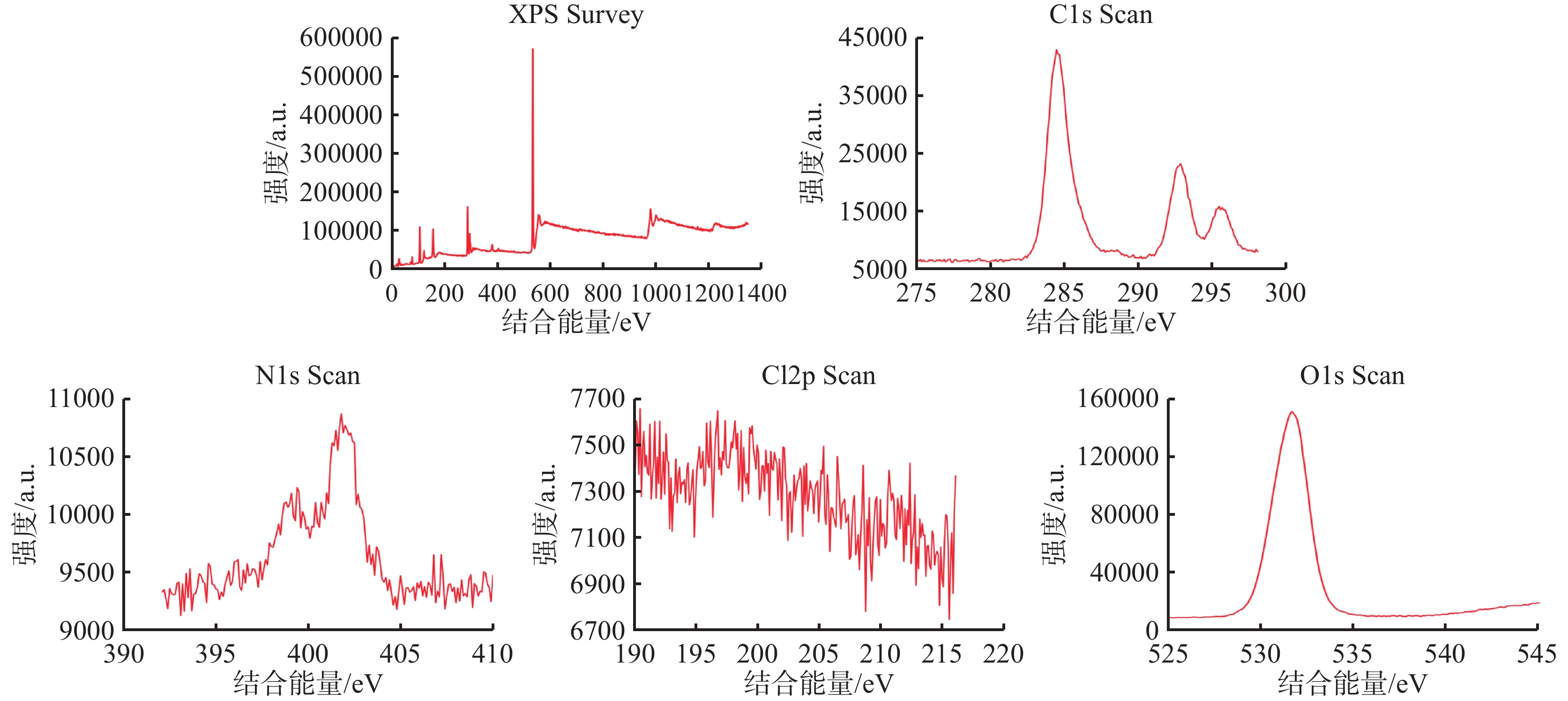
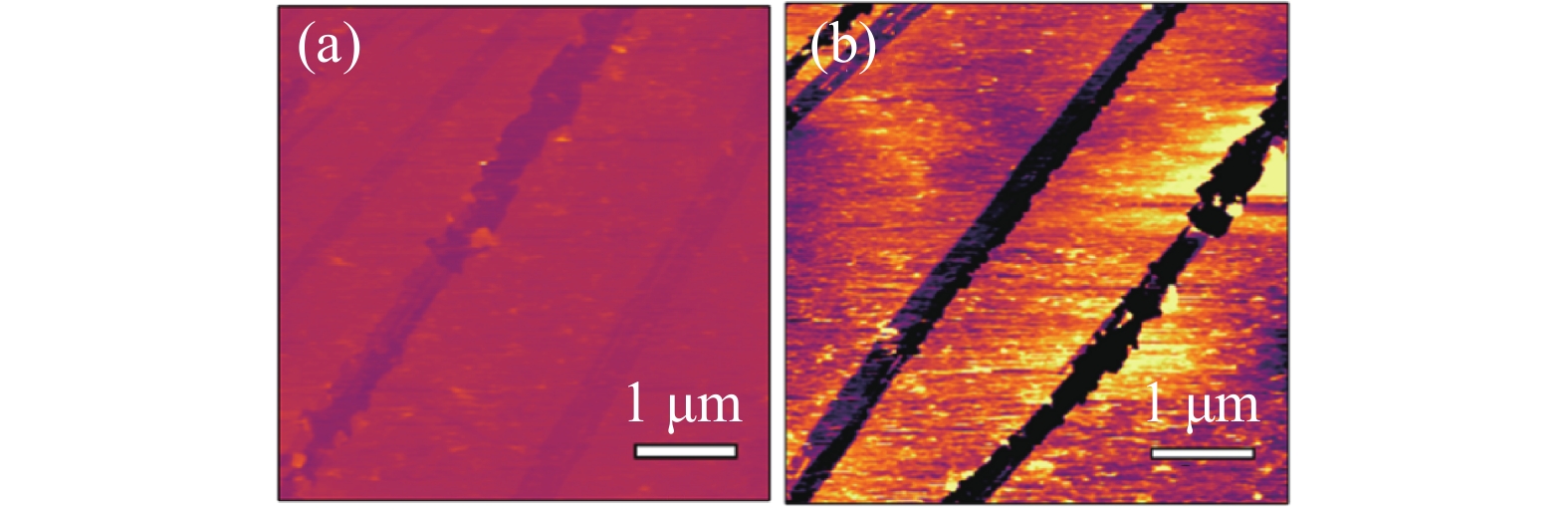
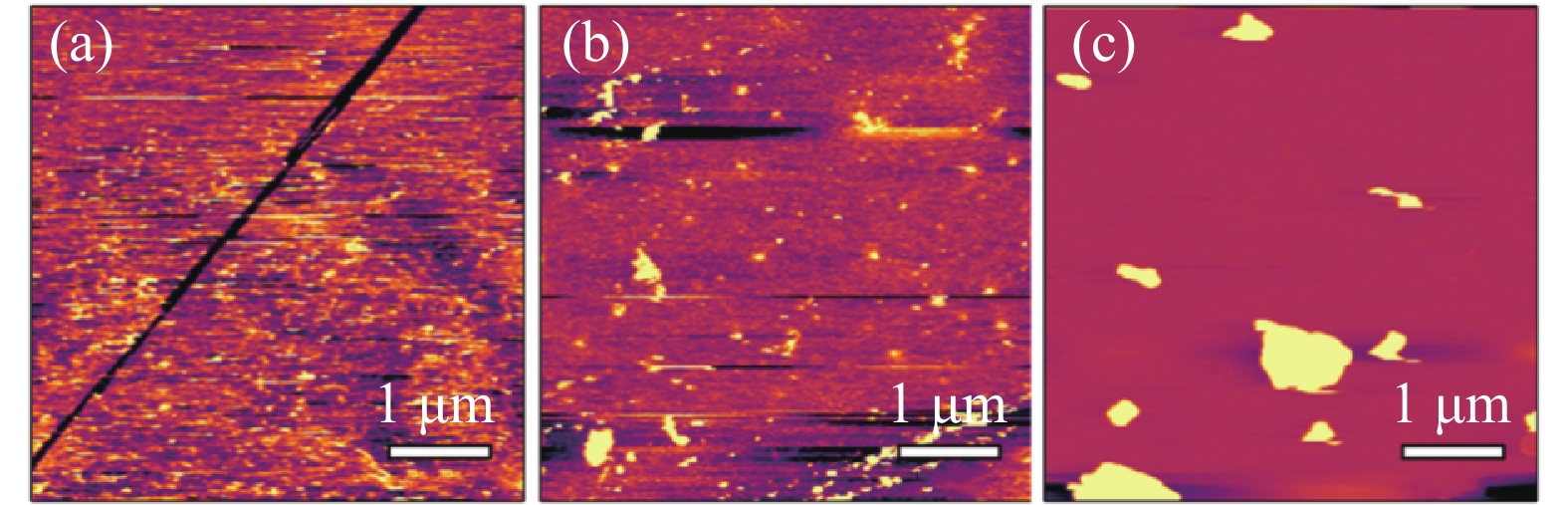
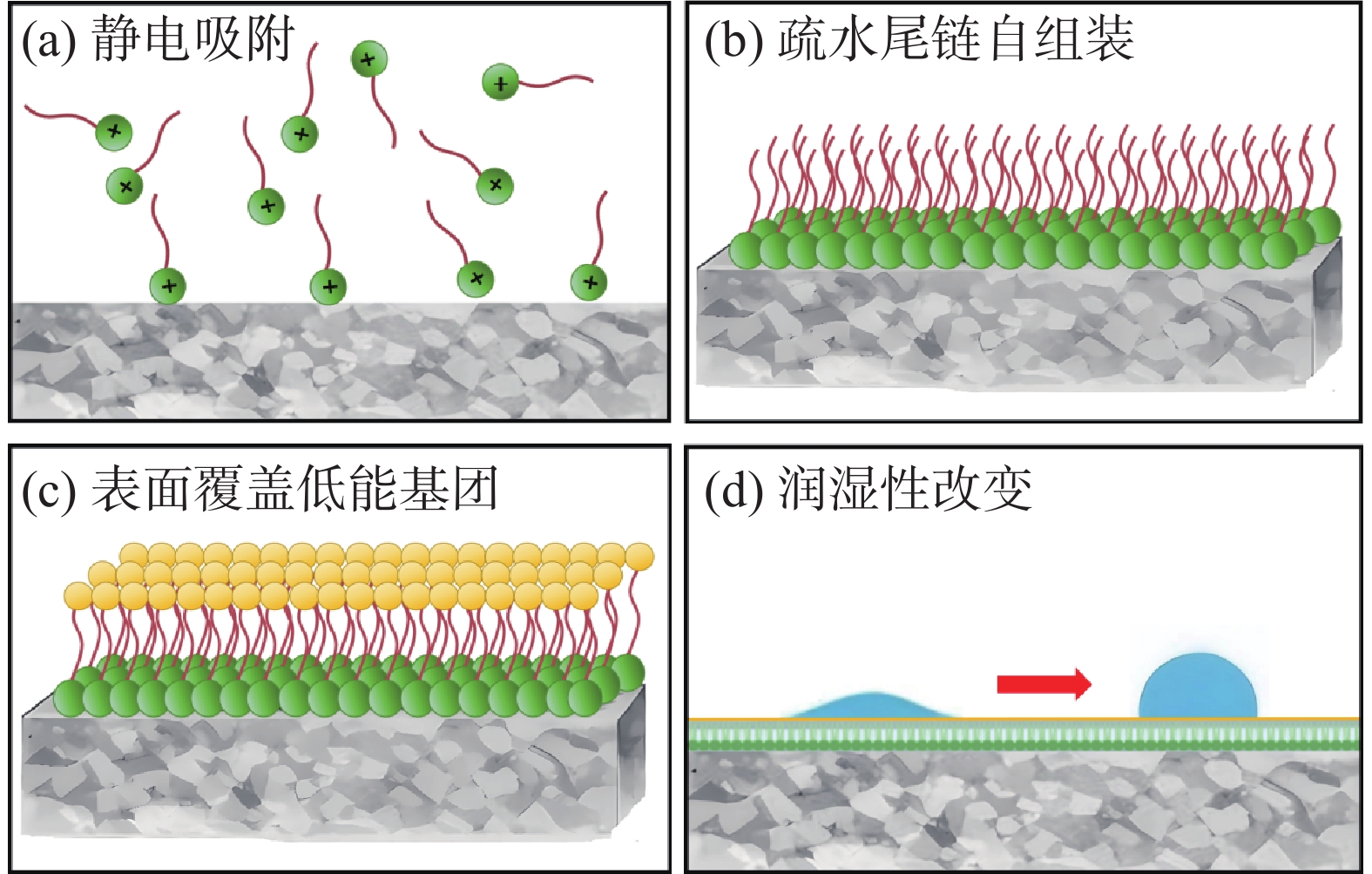
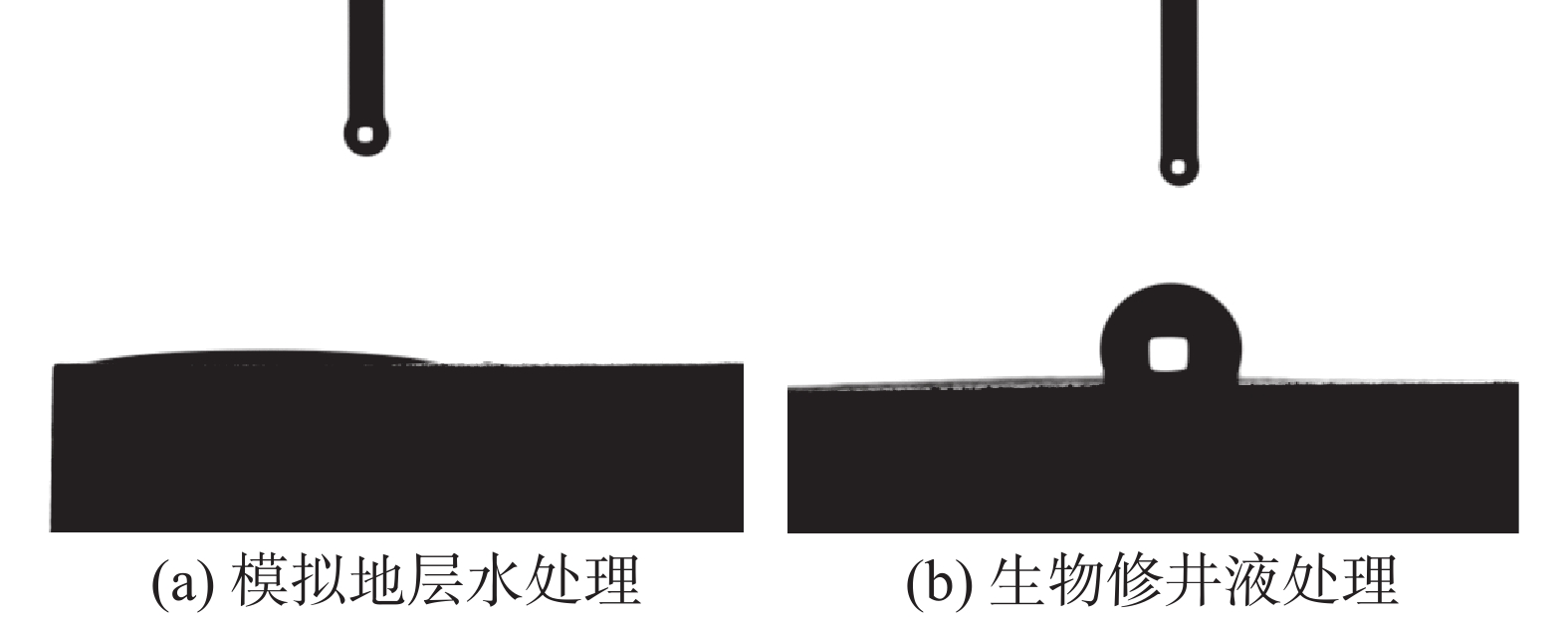
摘要: 针对海上中低渗油田在修井过程中因外来流体侵入易引发严重水锁伤害的问题,研制了一种基于改性鼠李糖脂的生物基防水锁修井液体系。该体系以缩水甘油基三甲基氯化铵(GTMAC)对鼠李糖脂进行阳离子改性,合成出具有低界面张力与润湿调控功能的防水锁剂,该防水锁剂解决了传统鼠李糖脂遇钙镁等二价阳离子沉淀的问题,将其与防膨剂、螯合剂等复配形成完整修井液体系。通过水相接触角、界面张力、岩心驱替、低场核磁共振、X射线光电子能谱及原子力显微镜等实验,系统评价了该体系的性能并阐明了其作用机理。结果表明,该修井液可使岩心表面水相接触角增大至104.7°,实现润湿性向疏水/中性反转;油水界面张力可降至10−2 mN/m量级;岩心驱替实验显示其渗透率恢复率达109.79%,显著高于空白样(56.74%)。机理分析表明,阳离子改性鼠李糖脂通过季铵基团强静电吸附于岩石表面,疏水尾链自组装形成低表面能分子膜,协同超低界面张力作用,有效降低毛细管阻力,促使滞留水相排出,从而预防与解除水锁伤害,展现出良好的应用潜力。Abstract: In response to the severe water-blocking damage easily induced by invasive foreign fluids during workover operations in offshore low-to-medium permeability oilfields, this study developed a bio-based workover fluid system for water-blocking prevention based on modified rhamnolipids. The system involves the cationic modification of rhamnolipids with glycidyltrimethylammonium chloride (GTMAC) to synthesize a water-blocking prevention agent with low interfacial tension and wettability control capabilities. This agent addresses the issue of precipitation caused by traditional rhamnolipids in the presence of divalent cations such as calcium and magnesium. By combining it with anti-swelling agents and chelating agents, a complete workover fluid system was formulated. Through experiments including aqueous phase contact angle measurement, interfacial tension analysis, core flooding, low-field nuclear magnetic resonance (NMR), X-ray photoelectron spectroscopy (XPS), and atomic force microscopy (AFM), the performance of the system was systematically evaluated, and its mechanism of action was elucidated. The results indicate that this workover fluid can increase the aqueous phase contact angle on core surfaces to 104.7°, achieving a reversal of wettability to hydrophobic/neutral. The oil-water interfacial tension can be reduced to the order of 10−2 mN/m. Core flooding experiments demonstrated a permeability recovery rate of 109.79%, significantly higher than that of the blank sample (56.74%). Mechanistic analysis reveals that the cationically modified rhamnolipids strongly electrostatically adsorb onto rock surfaces via quaternary ammonium groups, with their hydrophobic tails self-assembling to form a low-surface-energy molecular film. Synergized with ultra-low interfacial tension, this effectively reduces capillary resistance, promotes the discharge of trapped aqueous phases, thereby preventing and mitigating water-blocking damage, and demonstrates promising application potential.
-
Key words:
- Workover fluid /
- Water blocking prevention /
- Rhamnolipid /
- Cationic modification /
- Wettability reversal
-
表 2 目标区块地层水和海水离子组成统计表
类型 离子含量/(mg·L−1) K+ Na+ Mg2+ Ca2+ Cl− SO42− HCO3− CO32− 矿化度 地层水 83 4957 199 1004 10 399 39 137 2 16 820 海水 597.79 11 117.59 1373.10 506.58 20 081.46 2674.67 288.46 0.00 36 639.65  下载: 导出CSV
表 3 防水锁剂配伍性测试结果
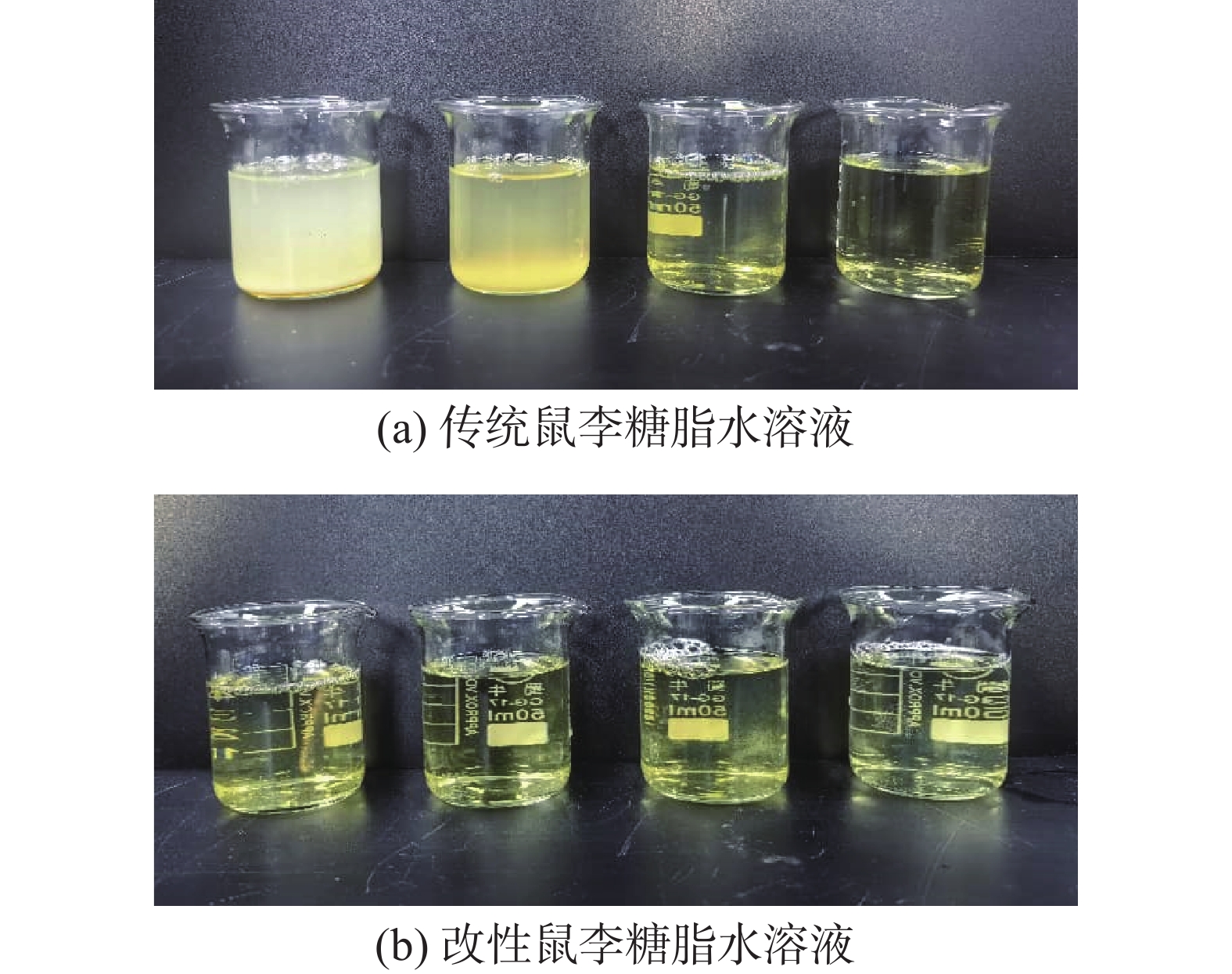
防水锁剂 溶剂 水相润湿角/(°) 界面张力/(mN·m−1) 浊度值/NTU 配伍性 传统鼠李糖脂 海水 19.8 0.850 385.9 不配伍 模拟地层水 42.9 0.747 225.7 不配伍 自来水 98.7 0.0301 7.861 配伍 去离子水 103.6 0.0159 2.933 配伍 改性鼠李糖脂 海水 104.7 0.0162 8.613 配伍 模拟地层水 103.2 0.0153 8.869 配伍 自来水 106.3 0.0149 5.728 配伍 去离子水 101.9 0.0152 3.452 配伍
下载: 导出CSV
表 4 岩心渗透率恢复率测试结果
岩心 驱替流体
类型原始渗透率/
mD反向渗透率/
mD渗透率
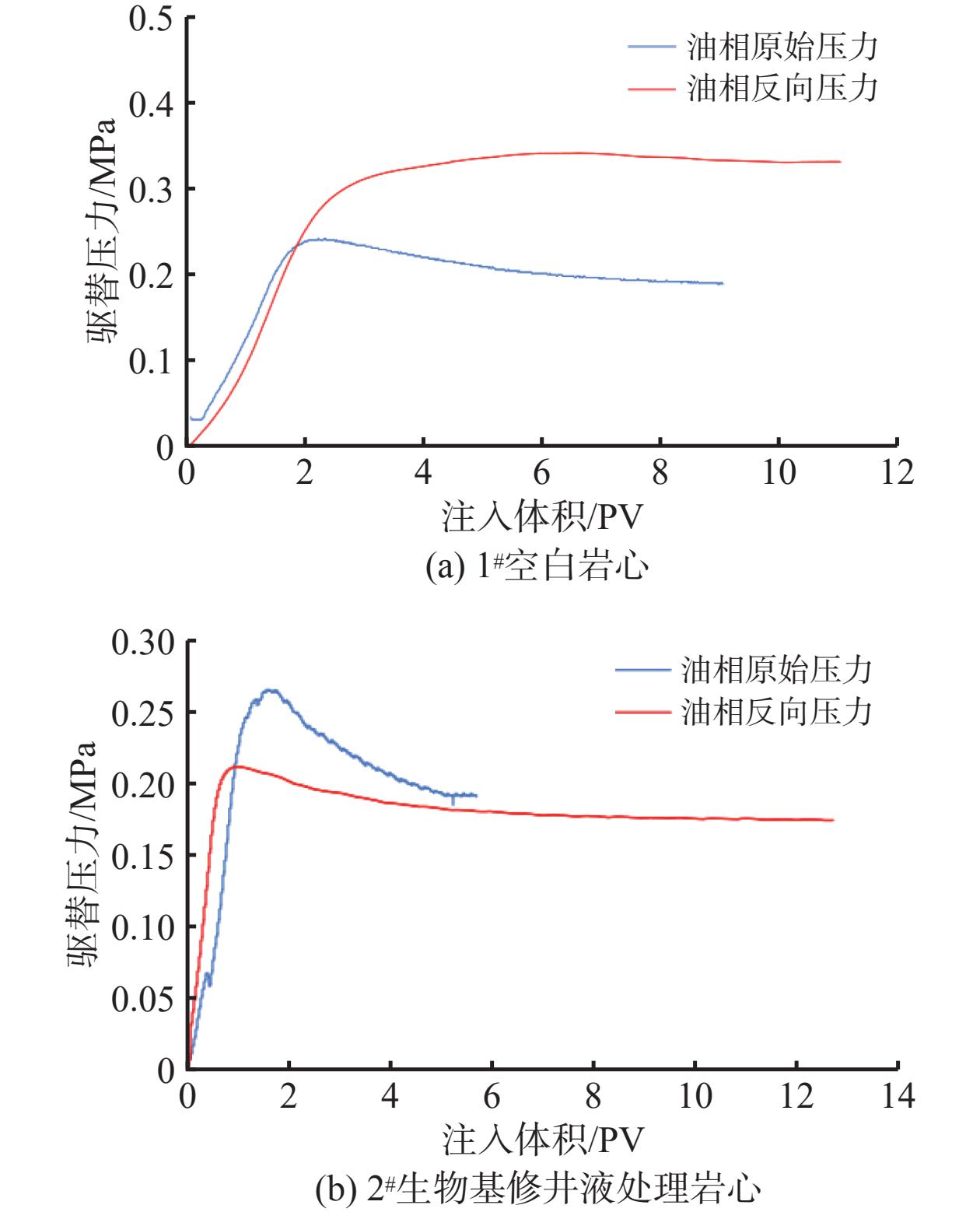
恢复率/%1# 模拟地层水 27.16 15.41 56.74 2# 生物基修井液 26.75 29.37 109.79
下载: 导出CSV
-
[1] 宫红亮. 海上低渗透油田钻井用高效防水锁剂的制备及性能评价[J]. 化学与生物工程, 2023, 40(10): 59-63.Gong Hongliang. Preparation and performance evaluation of efficient waterproof locking agent for drilling in offshore low permeability oilfield[J]. Chemistry & Bioengineering, 2023, 40(10): 59-63. [2] 王敏. 浅谈修井作业中油层保护液技术的研究[J]. 中国战略新兴产业, 2017(20): 63+65.Wang Min. A brief discussion on the research of reservoir protection fluid technology in workover operations[J]. China Strategic Emerging Industry, 2017(20): 63+65. [3] 马书瀚. 油田修井作业中油气层的保护技术[J]. 化学工程与装备, 2019, 282(3): 137-143.Ma Shuhan. Protection technology for oil and gas reservoirs in oilfield workover operations[J]. Chemical Engineering & Equipment, 2019, 282(3): 137. [4] 安一梅, 李丽华, 赵凯强, 等. 低渗透油气藏用防水锁剂体系的制备与性能评价[J]. 油田化学, 2021, 38(1): 19-23,33. doi: 10.19346/j.cnki.1000-4092.2021.01.004An Yimei, Li Lihua, Zhao Kaiqiang, et al. Preparation and performance evaluation of waterproof lock agent system for low permeability oil and gas reservoir[J]. Oilfield Chemistry, 2021, 38(1): 19-23,33. doi: 10.19346/j.cnki.1000-4092.2021.01.004 [5] 马云, 张欣瑜, 何顺安, 等. 解水锁剂的研究现状及展望[J]. 科学技术与工程, 2024, 24(9): 3489-3498.Ma Yun, Zhang Xinyu, He Shunan, et al. Review and prospect of research on anti-hydrolocking agents[J]. Science Technology and Engineering, 2024, 24(9): 3489-3498. [6] 万璐, 李霜, 黄和, 等. 生物表面活性剂及其复配体系在三次采油中的应用[J]. 生物加工过程, 2024, 22(3): 271-277. doi: 10.3969/j.issn.1672-3678.2024.03.004Wan Lu, Li Shuang, Huang He, et al. Application of biosurfactants and compound system in tertiary oil recovery[J]. Chinese Journal of Bioprocess Engineering, 2024, 22(3): 271-277. doi: 10.3969/j.issn.1672-3678.2024.03.004 [7] 钟炜欣, 闻宇晨, 侯吉瑞. 脂肽类生物表面活性剂用于提高原油采收率的研究进展[J]. 油田化学, 2024, 41(3): 553-562. doi: 10.19346/j.cnki.1000-4092.2024.03.024Zhong Weixin, Wen Yuchen, Hou Jirui. Research progress of Lipopeptide Biosurfactants for enhanced oil recovery[J]. Oilfield Chemistry, 2024, 41(3): 553-562. doi: 10.19346/j.cnki.1000-4092.2024.03.024 [8] Zhang Y, Miller R M, et al. Enhanced octadecane dispersion and biodegradation by a Pseudomonas rhamnolipid surfactant (biosurfactant)[J]. Applied and Environmental Microbiology, 1992, 58(10): 3276-3282. doi: 10.1128/aem.58.10.3276-3282.1992 [9] 马伟云, 黄凯, 王鹏, 等. 基于低场核磁共振技术的致密砂岩气藏防水锁作用机理研究[J]. 科学技术与工程, 2024, 24(4): 1459-1470. doi: 10.12404/j.issn.1671-1815.2303118Ma Weiyun, Huang Kai, Wang Peng, et al. Mechanism of waterproof locking in tight sandstone gas reservoir based on low field nuclear magnetic resonance technology[J]. Science Technology and Engineering, 2024, 24(4): 1459-1470. doi: 10.12404/j.issn.1671-1815.2303118 [10] 孙厚台. 低渗气藏功能纳米流体控水效果与机理研究[D]. 青岛: 中国石油大学(华东), 2015.Sun Houtai. Study on water control effect and mechanism of functional nanofluids in low-permeability gas reservoirs[D]. Qingdao: China University of Petroleum (East China), 2015. [11] Xie, Y, Li, et al. Effect of electrolytes on the surface behavior of rhamnolipids R1 and R2[J]. Colloids and Surfaces B: Biointerfaces, 2005, 45(2): 90-97. [12] Liu, J, Chen Y, Xu R, et al. Synthesis and properties of cationic rhamnolipid derivatives[J]. Journal of Surfactants and Detergents, 2013, 16(5): 625-631. [13] 徐芮, 孙宁, 孙伟, 等. 分子动力学模拟在矿物浮选中的研究进展[J]. 中南大学学报(自然科学版), 2024, 55(1): 1-19.Xu Rui, Sun Ning, Sun Wei, et al. Research progress of molecular dynamics simulation in mineral flotation[J]. Journal of Central South University (Science and Technology), 2024, 55(1): 1-19. [14] 王雪松, 林科雄, 罗刚, 等. 海上某油田修井伤害机理分析及修井液体系研究[J]. 山东化工, 2025, 54(4): 205-207,210. doi: 10.3969/j.issn.1008-021X.2025.04.056Wang Xuesong, Lin Kexiong, Luo Gang, et al. Analysis of well repair damage mechanism and study on well repair fluid system in a certain offshore oil field[J]. Shandong Chemical Industry, 2025, 54(4): 205-207,210. doi: 10.3969/j.issn.1008-021X.2025.04.056 [15] 齐宏伟, 赖璐. Gemini阳离子/含氟阴离子表面活性剂混合体系的界面润湿调控及解水锁机制研究[J]. 化学与生物工程, 2024, 41(5): 31-36. doi: 10.3969/j.issn.1672-5425.2024.05.005Qi Hongwei, Lai Lu. Interfacial wettability regulation and water locking mechanism of Gemini cationic/Fluorine-Containing anionic surfactant mixture[J]. Chemistry & Bioengineering, 2024, 41(5): 31-36. doi: 10.3969/j.issn.1672-5425.2024.05.005 -

 点击查看大图
图(9) / 表(5)
计量
- 文章访问数: 19
- HTML全文浏览量: 7
- PDF下载量: 1
- 被引次数: 0
