



High-Thixotropy Lost Circulation Control Cement Slurry Technology for the Rumaila Oilfield in Iraq
-
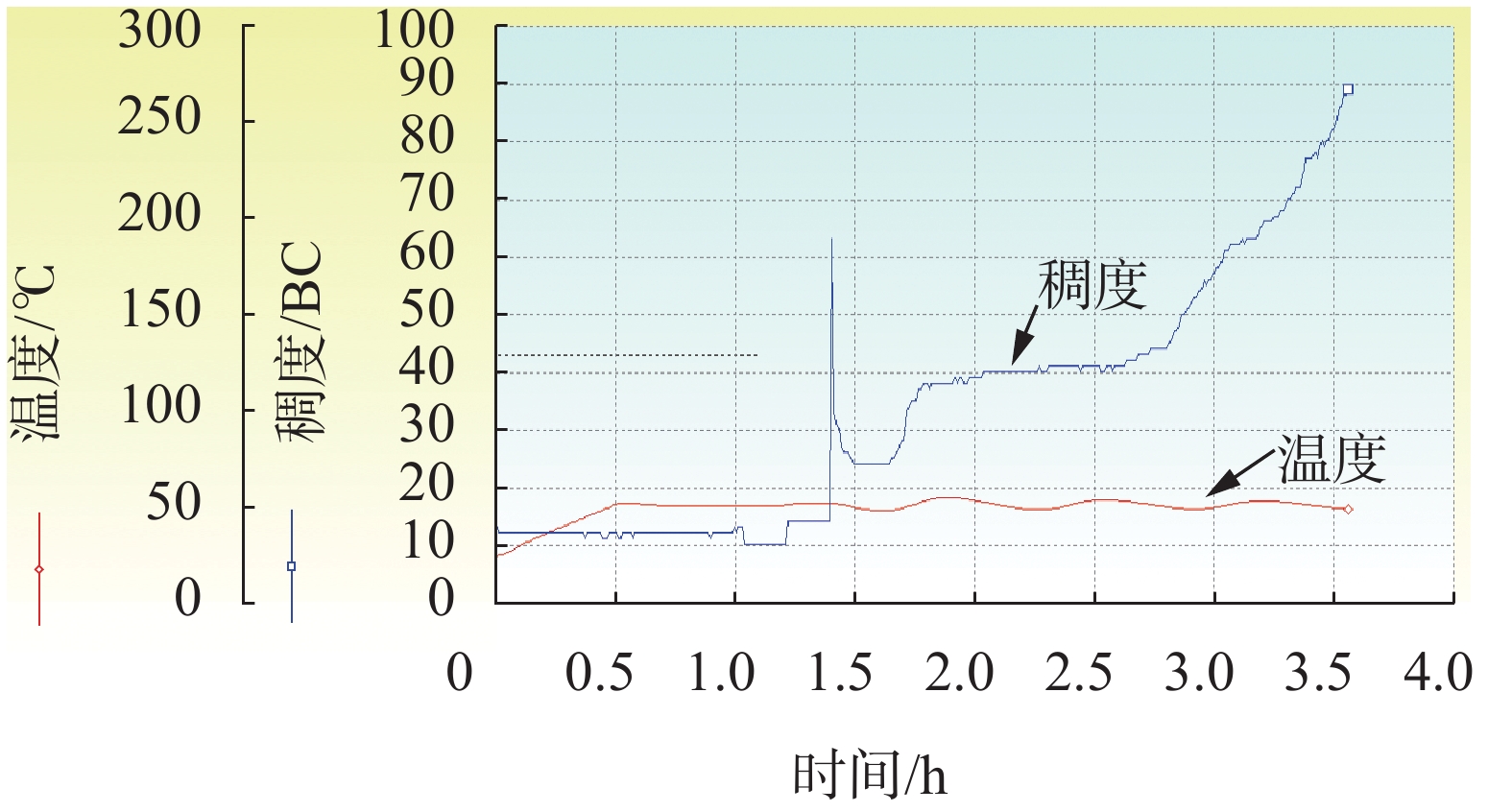
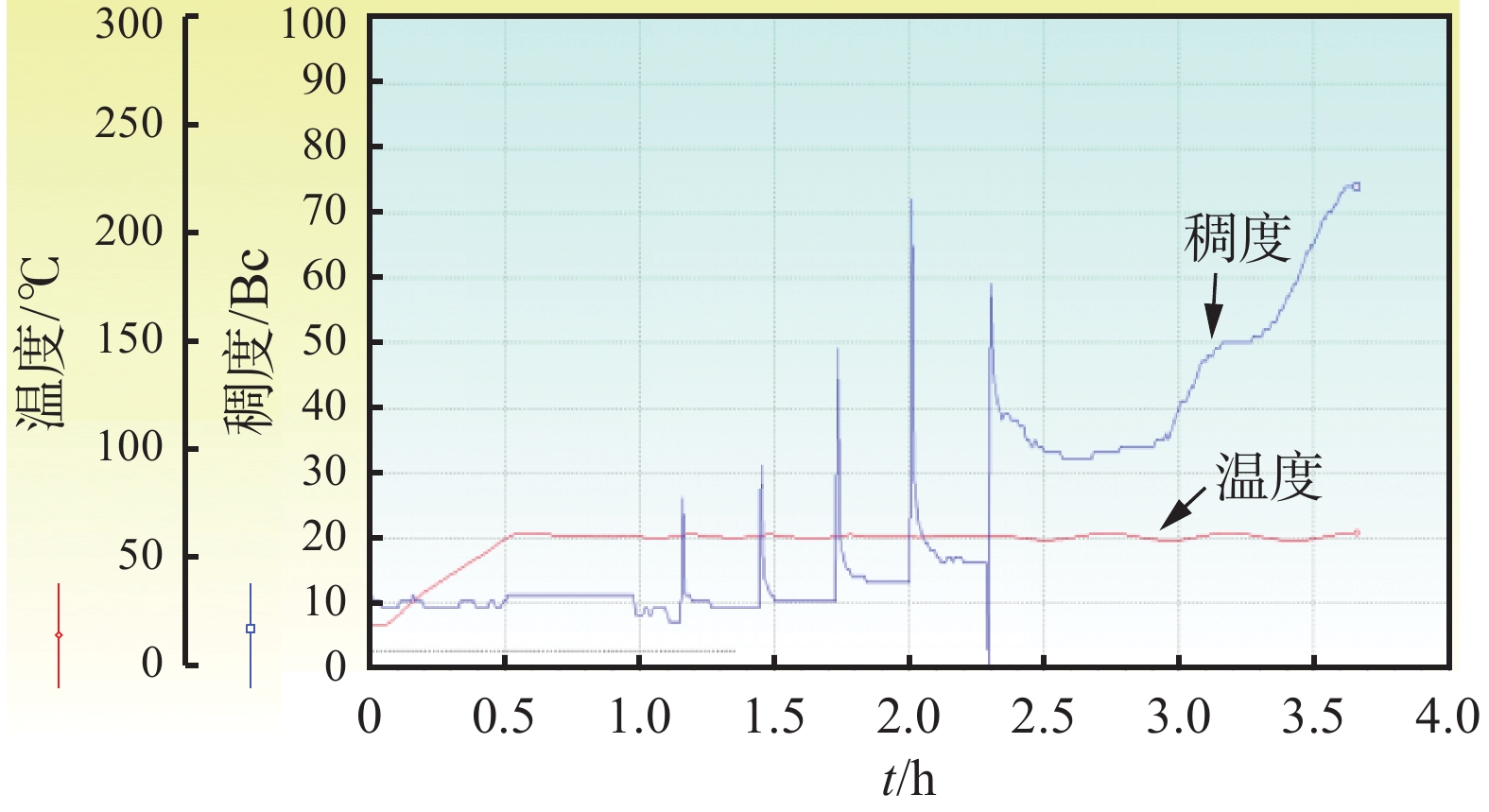
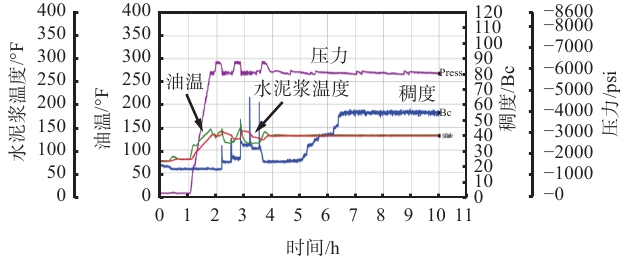
摘要: 针对伊拉克鲁迈拉油田缝洞发育地层严重漏失、常规堵漏水泥浆成塞困难的技术难题,基于触变机理分析,通过触变剂研选、减轻材料优化与早强性能调控,研发出密度为1.30 g/cm3的全干混低密度低强度触变水泥浆体系。通过室内筛选对比,系统测试了不同类型触变剂的作用效果,重点针对生物胶类触变剂开展系统性能评价,采用静切力差值法与稠度增值法结合的方式建立触变性评价体系,更精准量化水泥浆触变性能,深入研究不同加量下生物胶类触变剂对水泥浆流变性、触变性能的影响规律。结果表明,生物胶BDJ触变剂加量0.1%时,低密度水泥浆体系30 min稠度增值达39 Bc、30 min胶凝值为170 Pa,触变性能表现优异;同时该体系凝结时间可缩短至5.0 h,24 h抗压强度达到5.3 MPa,既能够满足快速成塞封堵漏失的需求,又避免了早期强度过高导致后续钻进困难问题,完美实现“节约堵漏时间、防钻出新井眼”的双重核心目标。与国内外同类技术产品进行对比分析,该体系在密度、触变性、早强性方面优势显著。现场应用结果表明:采用该触变水泥浆体系进行堵漏作业,单井堵漏作业非生产时间较鲁迈拉油田同区块常规堵漏井缩短30%以上,为低压易漏、缝洞发育地层的井漏堵漏工程提供了成熟可靠的新技术方案。Abstract: To address the severe lost circulation in fracture- and vug-developed formations of the Rumaila Oilfield in Iraq, where conventional lost circulation control cement slurries are difficult to form effective plugs, a fully dry-blended low-density, low-strength thixotropic cement slurry system with a density of 1.30 g/cm3 was developed based on thixotropic mechanism analysis. This was achieved through the selection of thixotropic agents, optimization of lightweight materials, and regulation of early strength performance. Thixotropy evaluation methods were established using the static shear stress difference method and the consistency increment method to study the effects of a biopolymer thixotropic agent on the rheological and thixotropic properties of the cement slurry. The results show that with 0.1% biopolymer BDJ as the thixotropic agent, the low-density cement slurry system exhibits excellent thixotropic performance: a 30 min consistency increment of 39 Bc and a 30 min gel strength of 170 Pa. The setting time of the thixotropic cement slurry system is shortened to 5.0 h, and the 24 h compressive strength reaches 5.3 MPa, achieving the dual goals of “saving plugging time and preventing the drilling of new boreholes.” Compared with similar domestic and international technologies, this system demonstrates significant advantages in density, thixotropy, and early strength. Field test validation shows that the non-productive time for plugging operations is reduced by more than 30% compared to wells in the same block of the Rumaila Oilfield, providing a new technical solution for lost circulation control in low-pressure and easily lost-circulation formations.
-
Key words:
- Thixotropic cement slurry /
- Biopolymer /
- Low density /
- Low strength /
- Lost circulation control
-
表 1 加入不同触变剂后水泥浆的稠度增值
触变剂 加量/
%流动度/
cm20 min稠度
增值/Bc30 min稠度
增值/Bc黏土 1.00 15 3 4 纳米二氧化硅 0.50 15 15 25 硅酸铝镁 1.00 17 5 8 生物胶BDJ 0.08 19 11 52 生物胶BDJ 0.10 18 25 63 丙烯酰胺 1.00 13 10 17 合成聚合物C 1.00 13 18 25 注:基础配方为:大连 G 级水泥 + 触变剂,水灰比为 0.44,测试温度为55 ℃。  下载: 导出CSV
表 2 触变剂与降失水剂配伍性试验
触变剂产品 降失水剂
A/%降失水剂
B/%20 min稠度
增值/Bc30 min稠度
增值/Bc纳米二氧化硅 0.5 4 5 纳米二氧化硅 0.5 3 4 合成聚合物C 0.5 10 15 合成聚合物C 0.5 8 15 生物胶BDJ 0.5 18 40 生物胶BDJ 0.5 14 35 注:基础配方为:大连 G 级水泥 + 触变剂 + 0.5% 降失水剂 A/B,水灰比 0.44,测试温度为 55 ℃。
下载: 导出CSV
表 3 减轻材料耐压稳定性对比
微珠种类 微珠密度/
g·cm−3初始浆密度/
g·cm−3稳压后密度/
g·cm−3普通漂珠 >0.70 1.30 1.33 KX-40 0.40 1.30 1.30 KP700 0.46 1.30 1.30 KX-120 0.60 1.30 1.30
下载: 导出CSV
表 4 常规水固比水泥石稳定性及抗压强度测试
水固比 成石稳定性/(g·cm−3) 24 h抗压强度/MPa 0.60 0.07 9.3 0.70 0.10 8.3 0.75 0.12 7.7
下载: 导出CSV
表 5 水固比设计与稳定剂优选实验
水固比 稳定剂 加量/
%成石稳定性/
g·cm−324 h抗压强度/
MPa0.85 羟乙基纤维素 0.5 0.10 6.0 1.0 0.08 5.7 硅藻土 2.0 0.09 6.2 4.0 0.06 6.5 纳米二氧化硅 0.5 0.04 6.2 1.0 0 6.5 0.90 羟乙基纤维素 1.5 无法正常搅拌 无法正常搅拌 硅藻土 4.0 0.09 5.8 纳米二氧化硅 1.0 0.02 4.6 0.95 纳米二氧化硅 1.0 0.04 4.0 注:配方:大连 G 级水泥 + (8.5%~11%)KX-40 +0.1%触变剂BDJ+10%微硅+1%降失水剂+稳定剂,水固比0.85~0.95,测试温度为55 ℃。
下载: 导出CSV
表 6 早强剂DQ-3加量对水泥浆性能的影响
DQ-3/% 凝结时间/h 稠化时间/h 24 h抗压强度/MPa 0 9.0 6.0 4.6 1.5 6.0 4.3 4.9 2.0 5.8 3.9 5.0 3.0 5.0 3.5 5.3 3.5 4.0 2.5 5.8 注:配方:大连 G 级水泥 +10%KX-40+0.1%触变剂BDJ+10%微硅+1%降失水剂+1%纳米二氧化硅+DQ-3,水固比0.90,测试温度为55 ℃。
下载: 导出CSV
表 7 自研体系与国内1.50 g/cm3触变水泥浆产品性能对比
水泥浆 p24 h/MPa t凝结/h 70 Bc稠化时间/min 30 min稠度增值/Bc 30 min胶凝值/Pa YP/Pa PV/mPa·s 自研全干混体系 5.3 5.0 210 39 170 14.2 82.5 国内某触变体系 4.6 6.0 280 20 35 16.1 125.0 注:稠化时间的条件为55 ℃、15 MPa、30 min;自研全干混体系密度为1.30 g/cm3,国内某触变体系密度为1.50 g/cm3。
下载: 导出CSV
表 8 自研体系与国外触变水泥浆体系性能对比
水泥浆 5段启停最大稠度增值/Bc 30 min胶凝值/Pa 强度对应时间/h p24 h/MPa 70 Bc稠化时间/h 50 psi 100 psi 自研全干混体系 56 170 4.5 5.0 5.3 3.5 国外某触变体系 50 192 5.5 7.0 4.3 10.0 注:自研全干混体系密度为1.30 g/cm3,国外某触变体系密度为1.50 g/cm3;1 psi=6.895 kPa。
下载: 导出CSV
-
[1] 马开华, 周建良, 谭春勤. 油气井井漏防治技术研究与应用进展[J]. 石油钻探技术, 2018, 46(2): 1-8.Ma Kaihua, Zhou Jianliang, Tan Chunqin. Research and application progress of lost circulation prevention and control technology for oil and gas wells[J]. Petroleum Drilling Techniques, 2018, 46(2): 1-8. [2] 汪和润. 伊拉克鲁迈拉油田固井技术[J]. 石油和化工设备, 2024, 27(9): 130-131,129.Wang Herun. Cementing technology for Rumaila oilfield in Iraq[J]. Petro-Chemical Equipment, 2024, 27(9): 130-131,129. [3] 张兴全, 李军, 柳贡慧, 等. 触变水泥浆体系在裂缝性漏失地层中的应用研究[J]. 钻井液与完井液, 2020, 37(4): 456-461.Zhang Xingquan, Li Jun, Liu Gonghui, et al. Application of thixotropic cement slurry system in fractured lost circulation formations[J]. Drilling Fluid and Completion Fluid, 2020, 37(4): 456-461. [4] 谢承斌, 卢海川, 李洋, 等. 水泥浆触变性评价方法的探索[J]. 钻井液与完井液, 2015, 32(6): 57-60. doi: 10.3696/j.issn.1001-5620.2015.06.015Xie Chengbin, Lu Haichuan, Li Yang, et al. Exploration on evaluation method of cement slurry thixotropy[J]. Drilling Fluid & Completion Fluid, 2015, 32(6): 57-60. doi: 10.3696/j.issn.1001-5620.2015.06.015 [5] 步玉环, 王强, 蔡壮, 等. 增压稠化仪的固井水泥浆触变性能评价方法[J]. 实验室研究与探索, 2020, 39(4): 37-41. doi: 10.3969/j.issn.1006-7167.2020.04.009Bu Yuhuan, Wang Qiang, Cai Zhuang, et al. A new evaluation method for thixotropic performance of cement slurry based on pressurized consistometer[J]. Research and Exploration in Laboratory, 2020, 39(4): 37-41. doi: 10.3969/j.issn.1006-7167.2020.04.009 [6] 王斯伟, 孙伟, 杜丽娜. 生物胶在无机涂料中的研究及应用[J]. 中国涂料, 2023, 38(1): 44-49,55. doi: 10.13531/j.cnki.china.coatings.2023.01.007Wang Siwei, Sun Wei, Du Lina. Research on biogums in inorganic coatings and application[J]. China Coatings, 2023, 38(1): 44-49,55. doi: 10.13531/j.cnki.china.coatings.2023.01.007 [7] 滕兆健, 邢秀萍, 常燕. 空心玻璃微珠低密度水泥浆的初步研究[J]. 钻井液与完井液, 2011, 28(增刊1): 23-25. doi: 10.3969/j.issn.1001-5620.2011.z1.008Teng Zhaojian, Xing Xiuping, Chang Yan. Preliminary study on low density cement slurry with hollow glass microspheres[J]. Drilling Fluid & Completion Fluid, 2011, 28(S1): 23-25. doi: 10.3969/j.issn.1001-5620.2011.z1.008 [8] 于桢琪, 刘新, 邵丽静, 等. 纳米二氧化硅改性原位聚合水泥基材料的性能及强化机理[J]. 硅酸盐学报, 2025, 53(8): 2340-2350. doi: 10.14062/j.issn.0454-5648.20250043Yu Zhenqi, Liu Xin, Shao Lijing, et al. Nano-silica modified in-situ polymerized cementitious materials(iPMCM): properties enhancement and strengthening mechanism[J]. Journal of the Chinese Ceramic Society, 2025, 53(8): 2340-2350. doi: 10.14062/j.issn.0454-5648.20250043 [9] 李万东, 吴阳, 兰小林. 厄瓜多尔东部油区平衡法悬空水泥塞固井技术[J]. 石油钻探技术, 2022, 50(4): 83-89. doi: 10.11911/syztjs.2022032Li Wandong, Wu Yang, LaN Xiaolin. Cementing technologies of balanced off-bottom cement plugs in eastern Ecuador[J]. Petroleum Drilling Techniques, 2022, 50(4): 83-89. doi: 10.11911/syztjs.2022032 [10] 付浩伟, 修建龙, 黄立信, 等. 生物聚合物硬葡聚糖及油田应用研究进展[J]. 石油与天然气化工, 2025, 54(3): 86-93. doi: 10.3969/j.issn.1007-3426.2025.03.012Fu Haowei, Xiu Jianlong, Huang Lixin, et al. Research progress on the biopolymer scleroglucan and its oilfield applications[J]. Chemical Engineering of Oil and Gas, 2025, 54(3): 86-93. doi: 10.3969/j.issn.1007-3426.2025.03.012 [11] 陈玉, 张怀强, 赵越, 等. 天然结晶纤维素的生物合成及其去晶化途径[J]. 生物化学与生物物理进展, 2016, 43(8): 747-757. doi: 10.16476/j.pibb.2016.0013Chen Yu, Zhang Huaiqiang, Zhao Yue, et al. Biosynthesis of natural crystal cellulose and its decrystallization[J]. Progress in Biochemistry and Biophysics, 2016, 43(8): 747-757. doi: 10.16476/j.pibb.2016.0013 [12] 秦江. 抗高温韧性防窜水泥浆体系性能评价[J]. 石油化工应用, 2025, 44(2): 49-53. doi: 10.3969/j.issn.1673-5285.2025.02.009Qin Jiang. Performance evaluation of high temperature resistance toughness and anti channeling cement slurry system[J]. Petrochemical Industry Application, 2025, 44(2): 49-53. doi: 10.3969/j.issn.1673-5285.2025.02.009 [13] 孔靖勋, 房延凤, 宋承哲, 等. 不同钙硅比纳米C-S-H对水泥早期水化性能的影响[J]. 混凝土, 2026(1): 106-110,120.Kong Jingxun, Fang Yanfeng, Song Chengzhe, et al. Effects of nano C-S-H with different C/S ratios on the early hydration of cement[J]. Concrete, 2026(1): 106-110,120. [14] 李海. 鲁迈拉南部油田RU45井溶洞性漏失堵漏技术[J]. 钻井液与完井液, 2014, 31(5): 92-94. doi: 10.3969/j.issn.1001-5620.2014.05.026Li Hai. Lost circulation control technology for cavernous loss in well RU45 of southern rumaila oilfield[J]. Drilling Fluid & Completion Fluid, 2014, 31(5): 92-94. doi: 10.3969/j.issn.1001-5620.2014.05.026 [15] 池涛. 伊拉克鲁迈拉油田水泥浆堵漏技术研究与应用[J]. 西部探矿工程, 2017, 29(9): 53-57.Chi Tao. Research and application of cement slurry lost circulation control technology in Iraq Rumaila oilfield[J]. West-China Exploration Engineering, 2017, 29(9): 53-57. -

 点击查看大图
图(4) / 表(8)
计量
- 文章访问数: 17
- HTML全文浏览量: 9
- PDF下载量: 2
- 被引次数: 0
