



The Influence of Glass Fibers on the Mechanical Performance and Microphase Composition of Sand-Added Oil Well Cement under Ultra-High Temperature
-
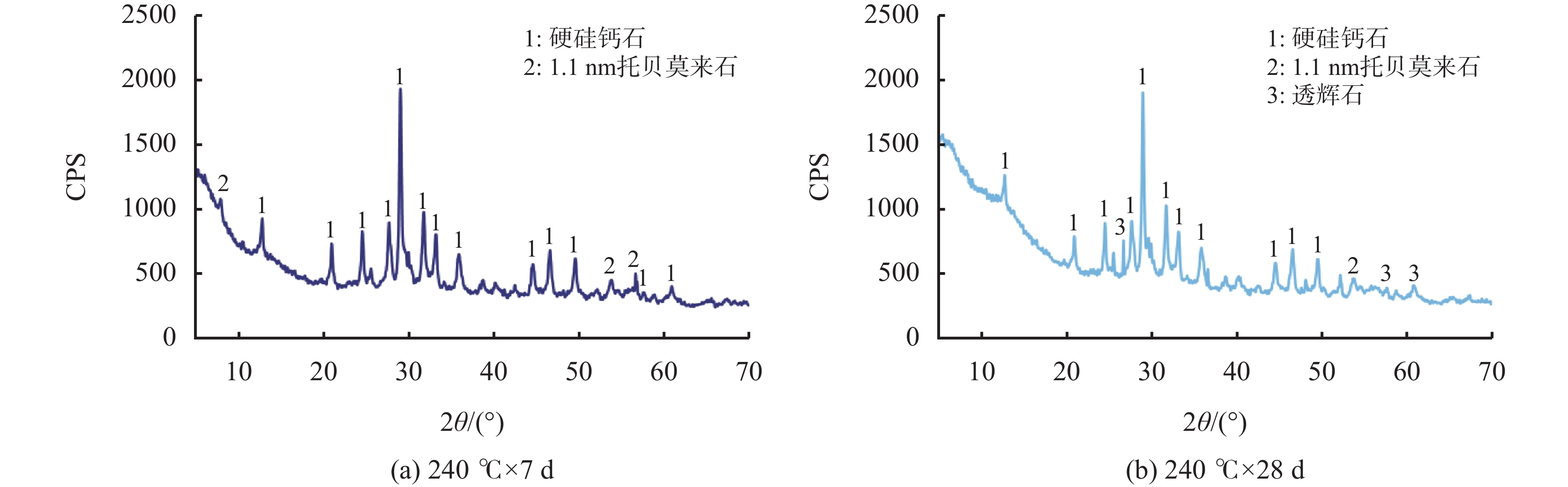
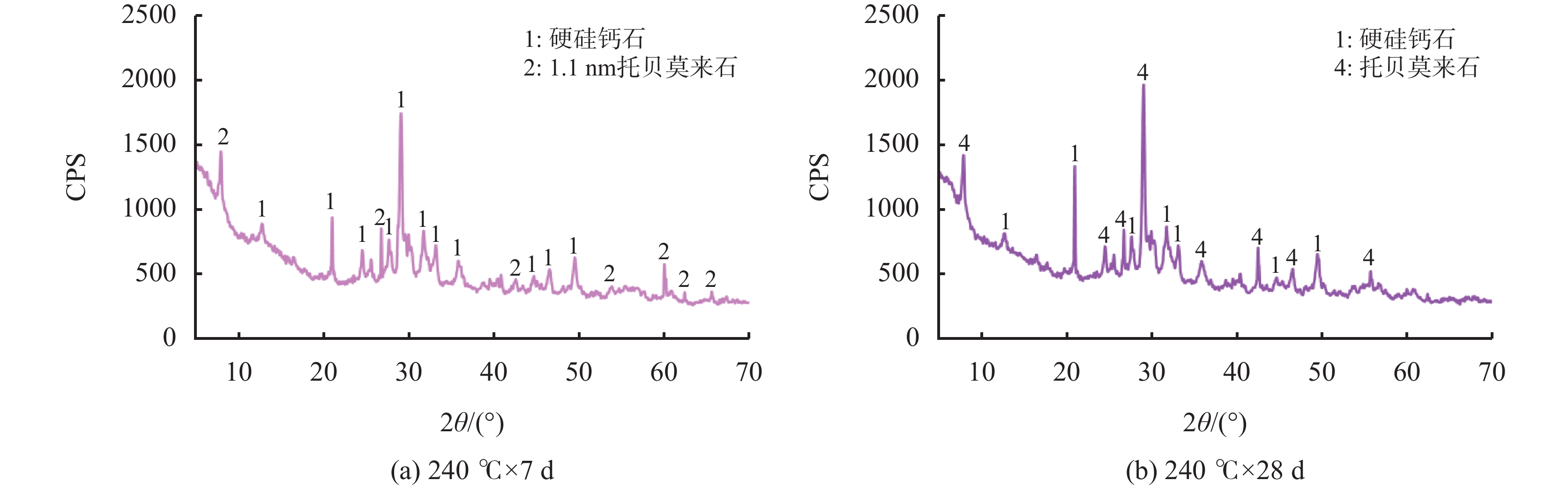
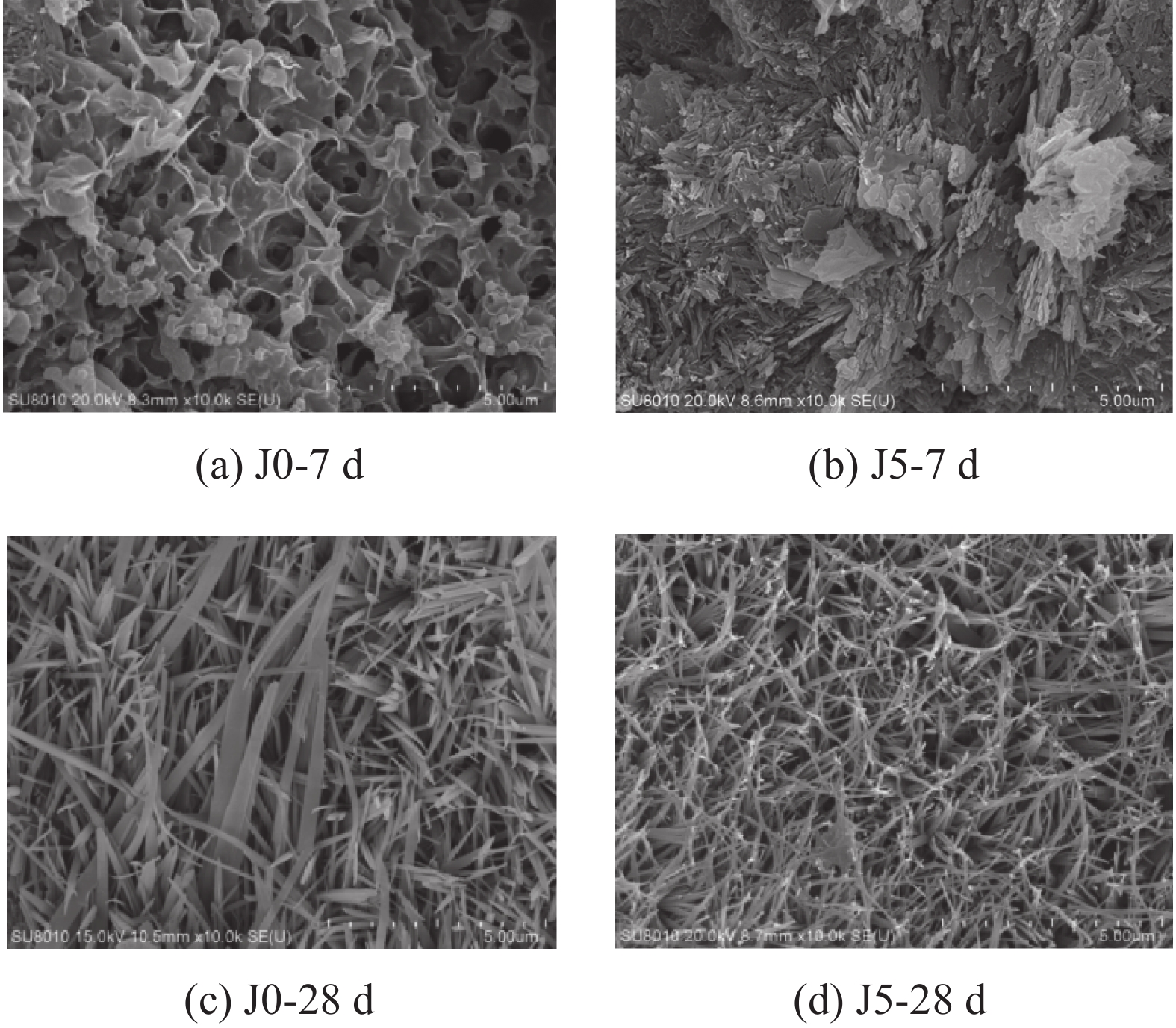
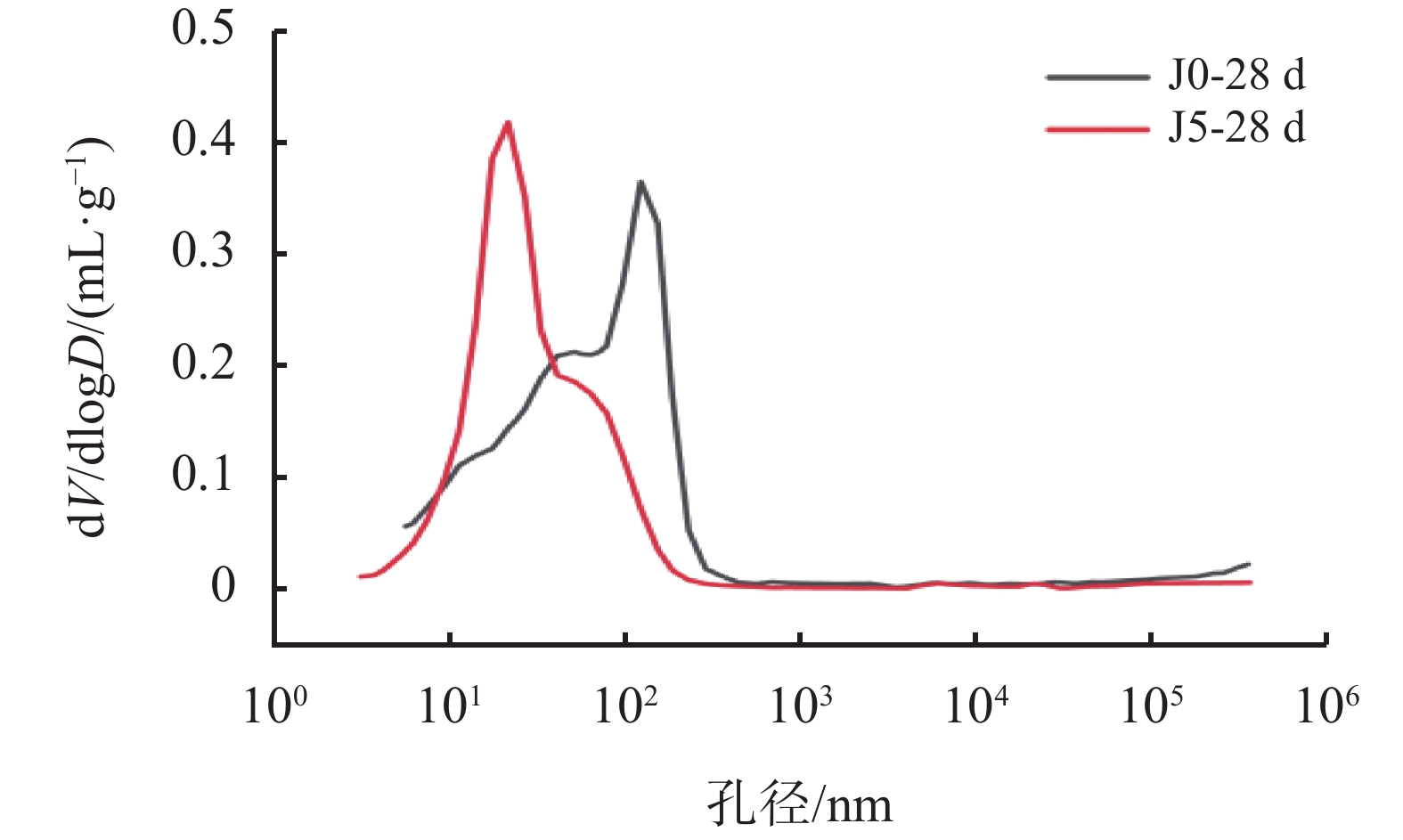
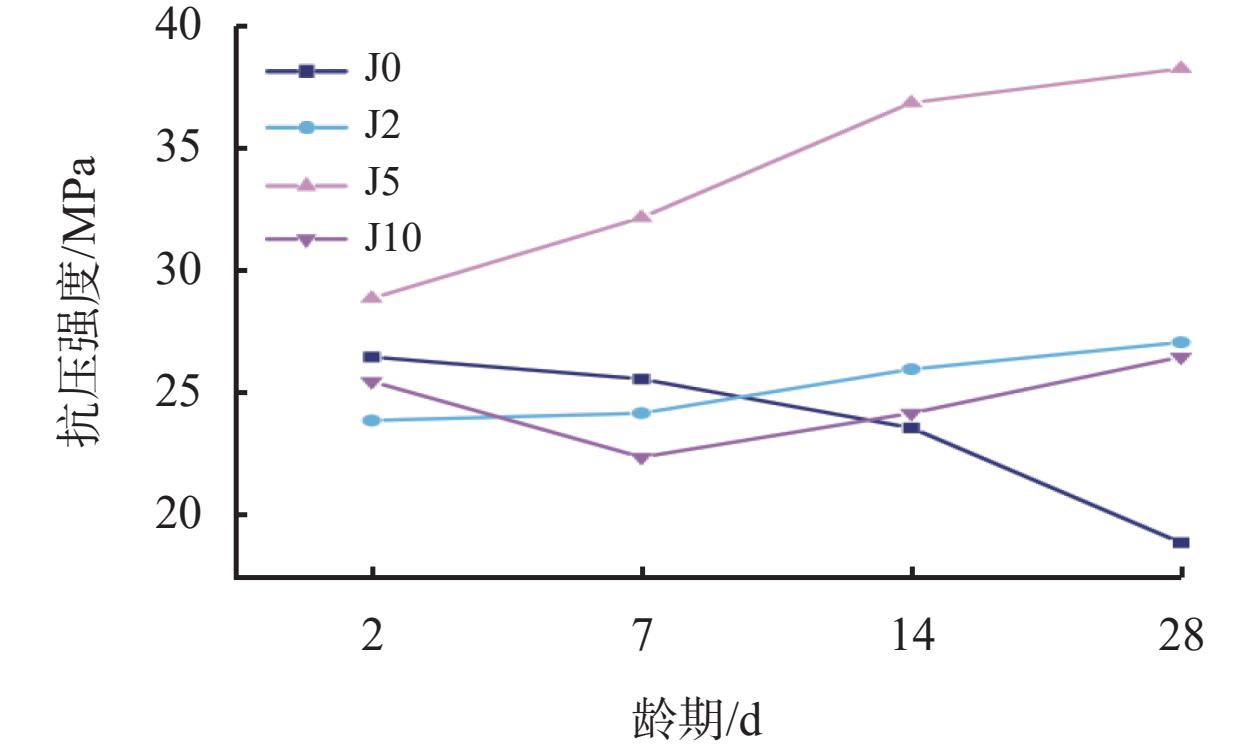
摘要: 在深井及超深井作业中,超高温高压等复杂工况对油井水泥石的力学性能提出了更高要求。掺石英砂是抑制水泥强度衰退最常用的手段,但在200 ℃以上功效减弱,因此探讨了玻璃纤维对超高温加砂水泥性能及微相组分的影响规律。选取嘉华G级油井水泥,掺入50%的200目石英砂,加入不同加量玻璃纤维Z-GF,在240 ℃和20.7 MPa下进行养护。结果表明,玻璃纤维能缓解超高温下水泥石强度的下降。确定玻璃纤维最佳掺量为5%,其28 d抗压强度达38.3 MPa,较2 d和7 d分别提升了32.5%和18.9%。固化28 d后,未加Z-GF水泥水化产物托贝莫来石转变为硬硅钙石,并生成透辉石新相,而含5%Z-GF的水泥石则以托贝莫来石为主;与未加Z-GF水泥相比,含5%Z-GF的水泥石小尺寸纳米孔(<20 nm)占比显著增加,由18.88%增加至39.56%。玻璃纤维和石英砂与CH反应,消耗多余SiO2,提高了水泥石长期强度。小尺寸纳米孔的增加和托贝莫来石的生成是抑制高温水泥石强度衰退的重要因素。Abstract: In deep and ultra-deep well operations, complex work conditions such as ultra-high temperature and high pressure impose higher requirements on the mechanical performance of oil well set cement. The most common method of inhibiting the set cement strength degradation is to add quartz sand into the cement slurry; however, the effectiveness of this method weakens at temperatures above 200 ℃. To deal with this situation, the influence of glass fiber on the properties and microphase composition of ultra-high temperature sand-added cement was investigated. Jiahua grade G cement slurries treated with 50% 200-mesh quartz sand and different quantities of glass fiber Z-GF were cured at 240 ℃ and 20.7 MPa. The test results show that glass fiber can mitigate the decline of the strength of the set cement at ultra-high temperatures. The optimal concentration of glass fiber was determined to be 5%, the 28-day compressive strength was 38.3 MPa, which was 32.5% and 18.9% higher than those of the 2-day and the 7-day. After curing for 28 days, the main hydrational product of the cement without Z-GF treatment, which was tobermorite, turned into a hard xonotlite, and a new phase diopside was produced, while the set cement containing 5%Z-GF was dominated by tobermorite. Compared with the cement without Z-GF, the set cement containing 5%Z-GF has the quantity of smaller-sized nanopores (<20 nm) significantly increased from 18.88% to 39.56%. Glass fiber and quartz sand react with CH to consume excess SiO2, enhancing the long-term strength of the set cement. The increase in the quantity of small-sized nanopores and the generation of tobermorite are the key factors in inhibiting the strength decline of the set cement at elevated temperatures.
-
Key words:
- Oil well cement /
- Ultra-high temperature /
- Quartz sand /
- Glass fiber /
- Tobermorite
-
表 1 各实验材料的组分
% 实验材料 SiO2 Al2O3 CaO Fe2O3 TiO2 SO3 K2O MgO P2O5 Na2O 水泥 19.478 3.403 63.037 6.156 0.35 3.71 0.517 2.459 0.036 石英砂 92.06 4.865 0.654 0.722 0.06 0.047 1.04 0.125 0.025 0.098 玻璃纤维 71.733 0.903 9.709 0.253 0.028 0.443 0.297 3.98 0.007 12.014  下载: 导出CSV
表 2 不同玻璃纤维加量对加砂水泥石力学性能的影响(240 ℃、20.7 MPa)
配方 Z-GF/
%p2 d/MPa p7 d/MPa p14 d/MPa p28 d/MPa 均值 误差 均值 误差 均值 误差 均值 误差 J0 0 26.5 1.0 25.6 1.1 23.6 3.4 18.9 2.5 J2 2 23.9 0.9 24.2 0.8 26.0 2.5 27.1 2.0 J5 5 28.9 2.3 32.2 2.1 36.9 1.2 38.3 1.6 J10 10 25.5 1.9 22.4 1.5 24.2 2.8 26.5 2.4
下载: 导出CSV
表 3 J0和J5水泥石的孔隙度及孔径分布
试样 养护时间/d 总孔隙率/% 孔径分布/% >200 nm 100~200 nm 50~100 nm 50~20 nm 10~20 nm <10 nm J0 28 41.14 7.30 21.30 30.14 22.38 11.17 7.71 J5 28 37.61 3.10 2.74 19.23 35.38 29.96 9.60
下载: 导出CSV
-
[1] 靳建洲, 魏风奇, 艾正青, 等. 超深特深油气井固井关键技术进展[J]. 钻采工艺, 2024, 47(2): 104-112.JIN Jianzhou, WEI Fengqi, AI Zhengqing, et al. Key technologies for cementing of deep and ultra-deep oil and gas wells[J]. Drilling & Production Technology, 2024, 47(2): 104-112. [2] 于永金, 夏修建, 王治国, 等. 深井、超深井固井关键技术进展及实践[J]. 新疆石油天然气, 2023, 19(2): 24-33. doi: 10.12388/j.issn.1673-2677.2023.02.003YU Yongjin, XIA Xiujian, WANG Zhiguo, et al. Progress and application of the key technologies of deep and ultra-deep well cementing[J]. Xinjiang Oil & Gas, 2023, 19(2): 24-33. doi: 10.12388/j.issn.1673-2677.2023.02.003 [3] 张国光, 王春雨, 代丹, 等. 高温高压下石英砂粒径对油井水泥石性能的影响[J]. 钻井液与完井液, 2022, 39(4): 466-471.ZHANG Guoguang, WANG Chunyu, DAI Dan, et al. The effects of particle size of silica flour on the performance of oil well cement at high temperature and high pressure[J]. Drilling Fluid & Completion Fluid, 2022, 39(4): 466-471. [4] 姚晓, 葛荘, 汪晓静, 等. 加砂油井水泥石高温力学性能衰退机制研究进展[J]. 石油钻探技术, 2018, 46(1): 17-23. doi: 10.11911/syztjs.2018008YAO Xiao, GE Zhuang, WANG Xiaojing, et al. Researchprogress of dagradation of mechanical properties of sand-containing cement in high temperature regimes[J]. Petroleum Drilling Techniques, 2018, 46(1): 17-23. doi: 10.11911/syztjs.2018008 [5] HAMADA H M, ABED F, BINTI KATMAN H Y, et al. Effect of silica fume on the properties of sustainable cement concrete[J]. Journal of Materials Research and Technology, 2023, 24: 8887-8908. doi: 10.1016/j.jmrt.2023.05.147 [6] JI G, PENG X, WANG S, et al. Influence of ground quartz sand finesses on the formation of poorly ordered calcium silicate hydrate prepared by dynamically hydrothermal synthesis[J]. Case Studies in Construction Materials, 2024, 20: e02746. [7] 张景富, 朱健军, 代奎, 等. 温度及外加剂对G级油井水泥水化产物的影响[J]. 大庆石油学院学报, 2004, 28(5): 94-97.ZHANG Jingfu, ZHU Jianjun, DAI Kui, et al. Effect of temperature and additives on hydration products of Class G oil well cement[J]. Journal of Daqing Petroleum Institute, 2004, 28(5): 94-97. [8] 张景富, 徐明, 高莉莉, 等. 温度及外加剂对G级油井水泥强度的影响[J]. 石油钻采工艺, 2003, 25(3): 19-23.ZHANG Jingfu, XU Ming, GAO Lili, et al. Effect of terature and additives on strength of class G oil well cement[J]. Oil Drilling & Production Technology, 2003, 25(3): 19-23. [9] 万炳甲, 王明义. 玻纤增强聚丙烯复合材料研究进展[J]. 工程塑料应用, 2019, 47(11): 139-143,155.WAN Bingjia, WANG Mingyi. Research progress of glass fiber reinforced polypropylene composites[J]. Engineering Plastics Application, 2019, 47(11): 139-143,155. [10] 赵智奎, 戚栋明, 王龙飞, 等. 玻璃纤维界面改性及其复合材料力学性能的研究进展[J]. 纺织科学与工程学报, 2023, 40(3): 120-125,138. doi: 10.3969/j.issn.2096-5184.2023.03.017ZHAO Zhikui, QI Dongming, WANG Longfei, et al. Research progress of glass fiber interface modification and mechanical properties of Its composites[J]. Journal of Textile Science & Engineering, 2023, 40(3): 120-125,138. doi: 10.3969/j.issn.2096-5184.2023.03.017 [11] 乐东钊, 姜久红, 文韬, 等. 玻璃纤维掺量对混凝土流动性及力学性能的影响[J]. 湖北工业大学学报, 2020, 35(2): 92-95.YUE Dongzhao, JIANG Jiuhong, WEN Tao, et al. Effect of glass fiber content on the fluidity and mechanical properties of concrete[J]. Journal of Hubei University of Technology, 2020, 35(2): 92-95. [12] PANG X Y, SUN L J, CHEN M, et al. Influence of curing temperature on the hydration and strength development of class G portland cement[J]. Cement and Concrete Research, 2022, 156: 106776. doi: 10.1016/j.cemconres.2022.106776 [13] SUN L J, PANG X Y, GHABEZLOO S, et al. Hydration kinetics and strength retrogression mechanism of silica-cement systems in the temperature range of 110 ℃–200 ℃[J]. Cement and Concrete Research, 2023, 167: 107120. doi: 10.1016/j.cemconres.2023.107120 [14] PANG X Y, QIN J K, SUN L J, et al. Long-term strength retrogression of silica-enriched oil well cement: a comprehensive multi-approach analysis[J]. Cement and Concrete Research, 2021, 144: 106424. doi: 10.1016/j.cemconres.2021.106424 [15] GB/T 19139-2012 油井水泥试验方法[S].GB/T 19139-2012 Oil well cement test method[S]. [16] 王成文, 陈新, 周伟, 等. 纳米SiO2溶胶缓解油井水泥高温强度衰退的作用机理[J]. 天然气工业, 2019, 39(3): 72-79. doi: 10.3787/j.issn.1000-0976.2019.03.009WANG Chengwen, CHEN Xin, ZHOU Wei, et al. Working mechanism of nano-SiO2 sol to alleviate the strength decline of oil well cement under high temperature[J]. Natural Gas Industry, 2019, 39(3): 72-79. doi: 10.3787/j.issn.1000-0976.2019.03.009 [17] 杨智光, 崔海清, 肖志兴. 深井高温条件下油井水泥强度变化规律研究[J]. 石油学报, 2008, 29(3): 435-437. doi: 10.3321/j.issn:0253-2697.2008.03.024YANG Zhiguang, CUI Haiqing, XIAO Zhixing. Change of cement stone strength in the deep high temperature oil well[J]. Acta Petrolei Sinica, 2008, 29(3): 435-437. doi: 10.3321/j.issn:0253-2697.2008.03.024 [18] 耿晨梓, 姚晓, 代丹, 等. SiO2晶态物性对高温水泥石力学性能的影响[J]. 钻井液与完井液, 2020, 37(6): 777-783. doi: 10.3969/j.issn.1001-5620.2020.06.018GENG Chenzi, YAO Xiao, DAI Dan, et al. Effects of physical properties of SiO2 crystalline state on mechanical properties of high temperature set cement[J]. Drilling Fluid & Completion Fluid, 2020, 37(6): 777-783. doi: 10.3969/j.issn.1001-5620.2020.06.018 [19] ISO 15901-1:2016. Evaluation of pore size distribution and porosity of solid materials by mercury porosimetry and gas adsorption—Part 1: Mercury porosimetry[S]. Geneva: ISO, 2016. -

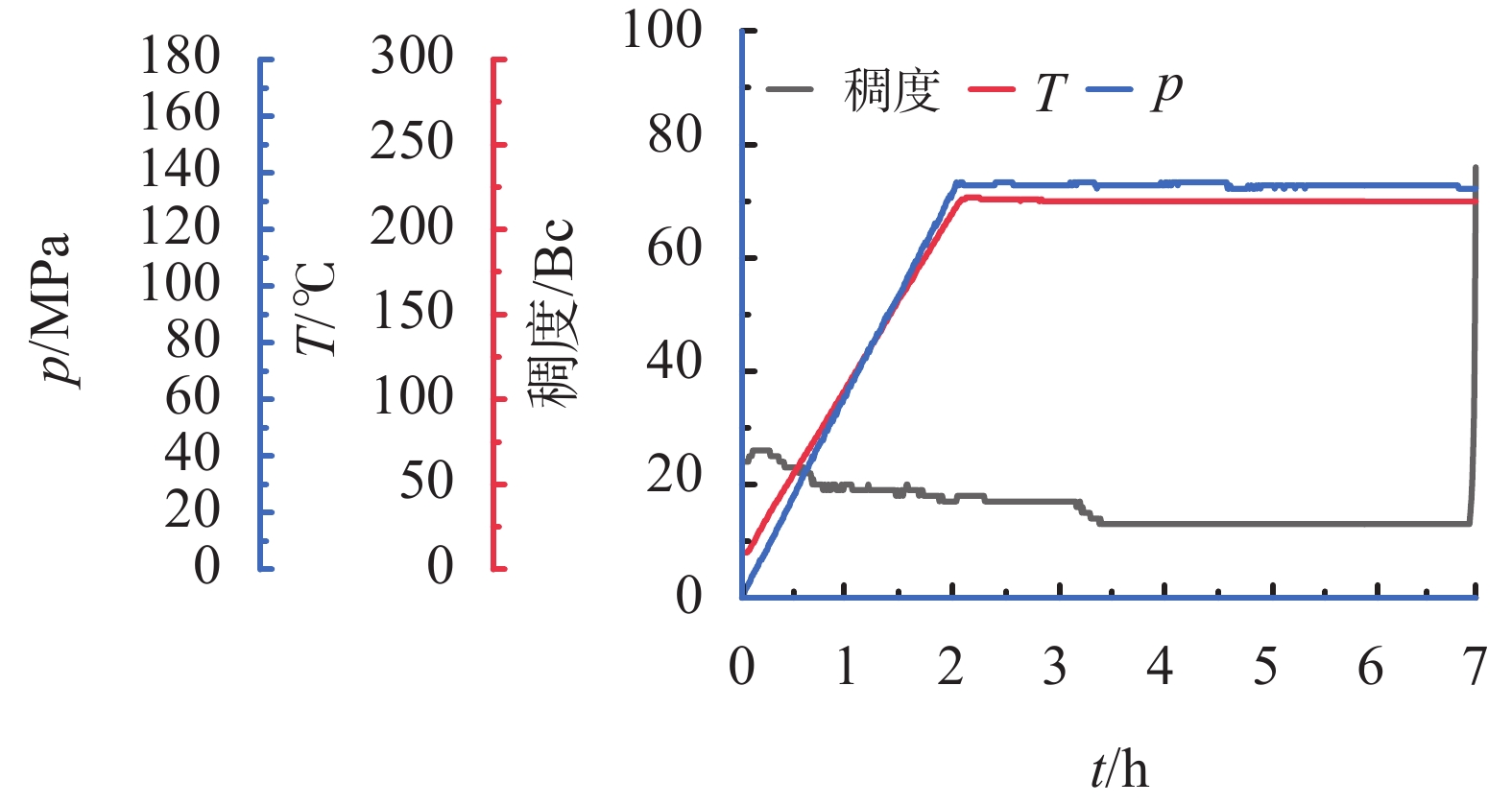
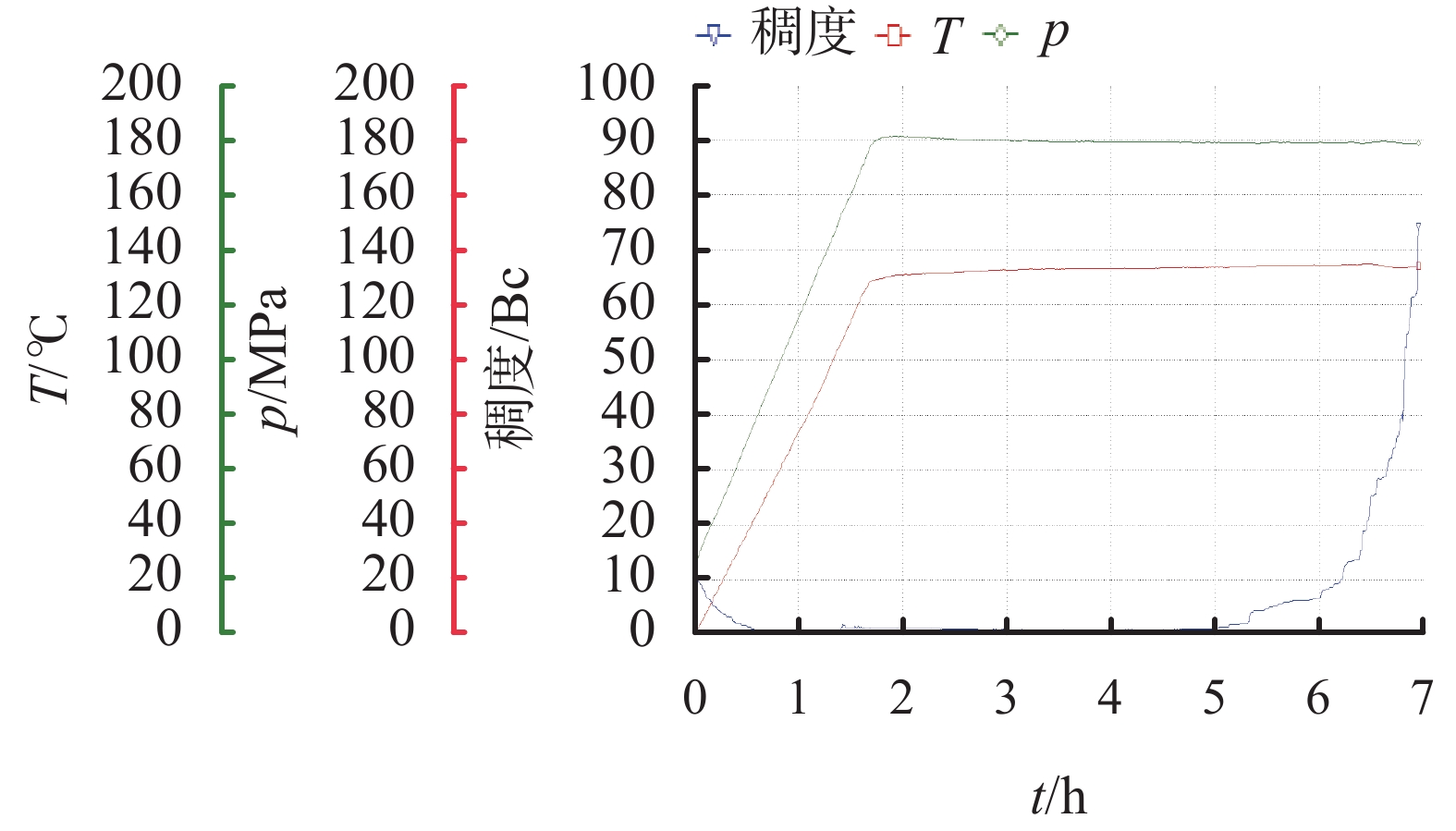
 点击查看大图
图(7) / 表(3)
计量
- 文章访问数: 11
- HTML全文浏览量: 4
- PDF下载量: 1
- 被引次数: 0
