



Quantitative Analysis Method for Residue Flushing Fluid Residue on Cement Sheaths and Its Effect on Set Cement
-
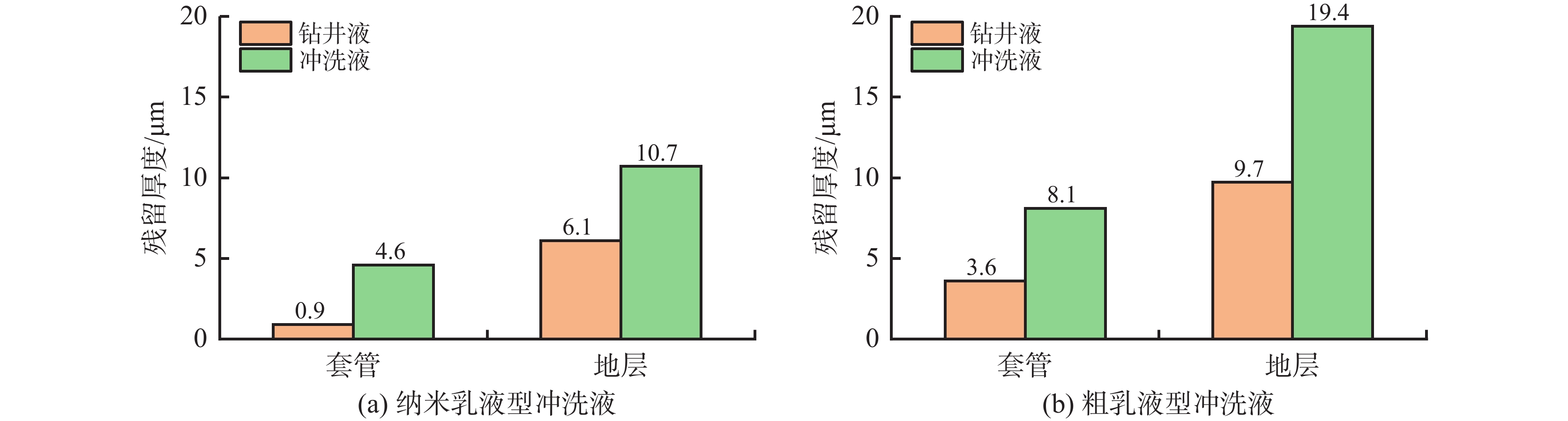
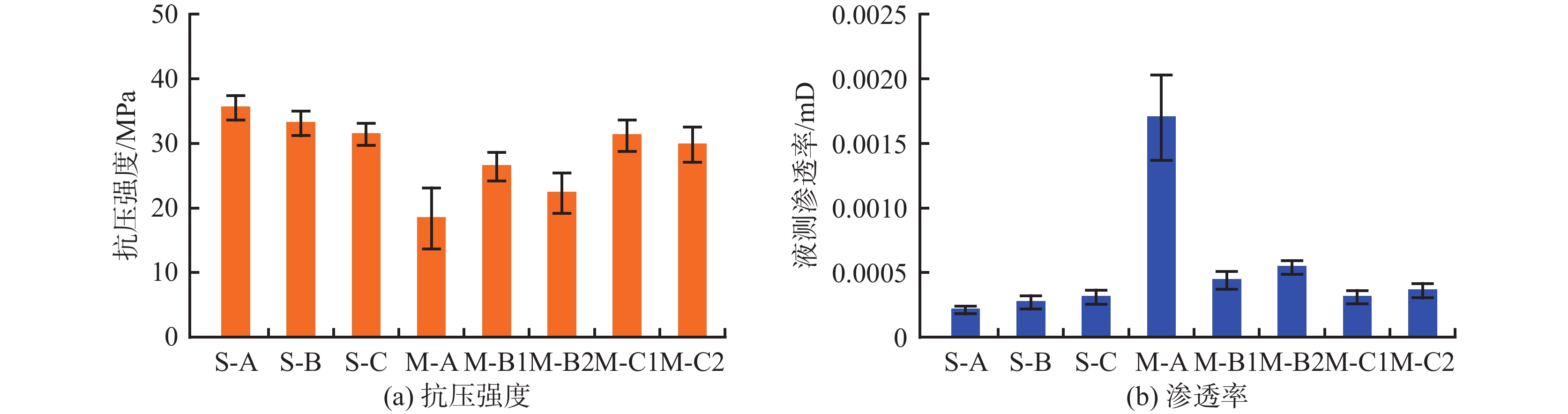
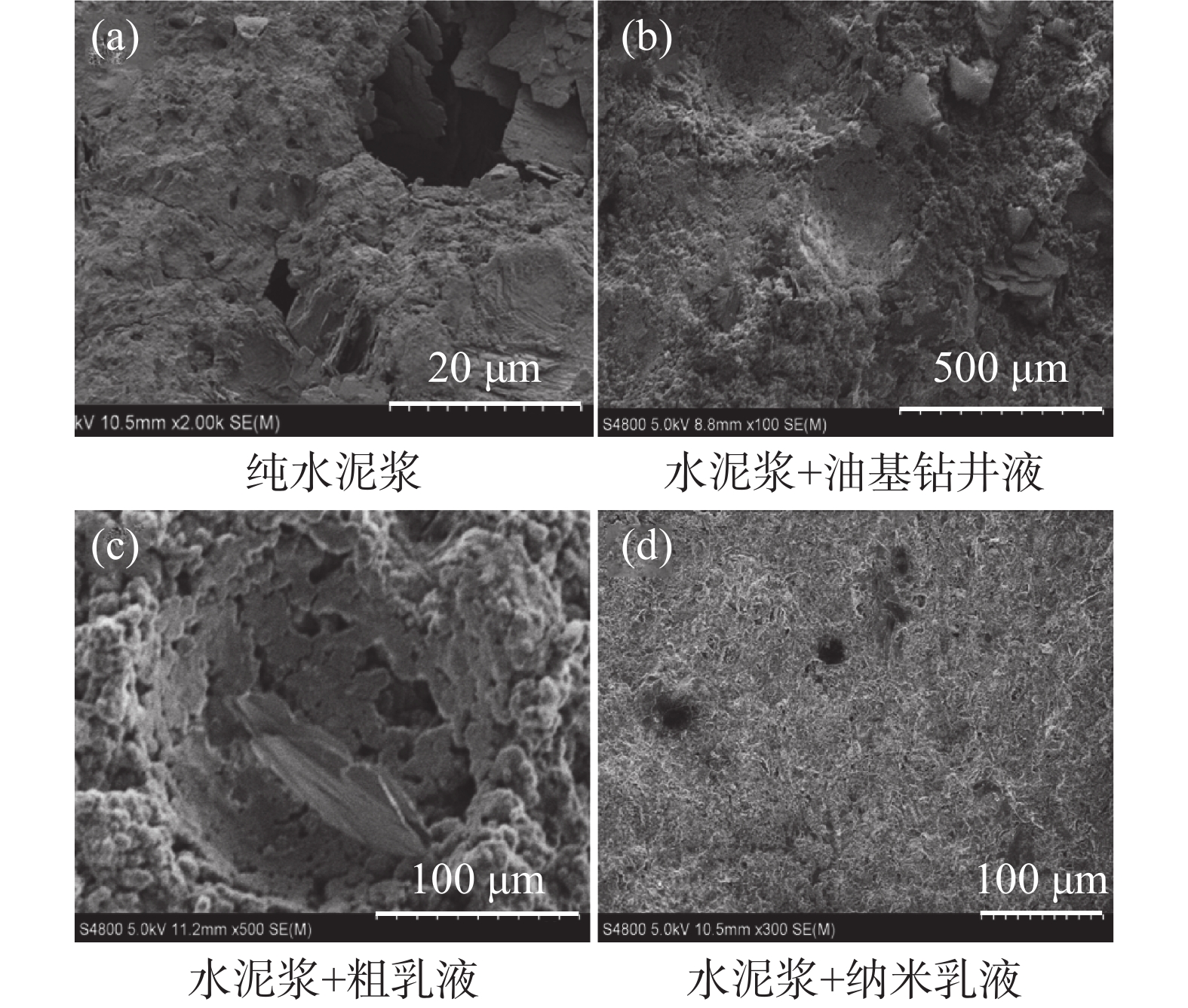
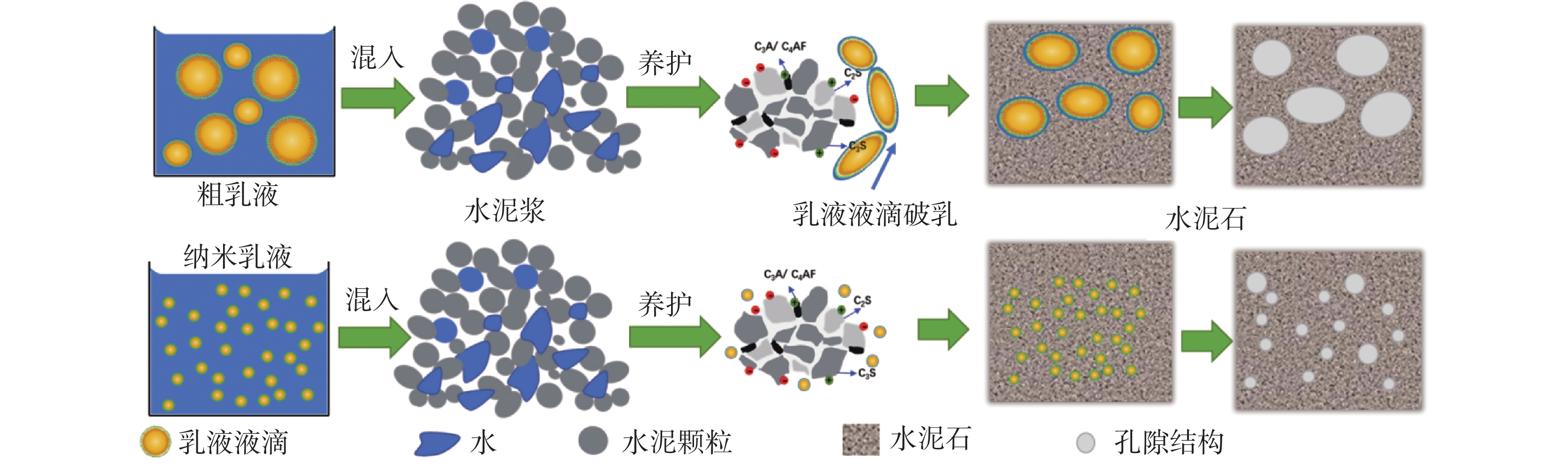
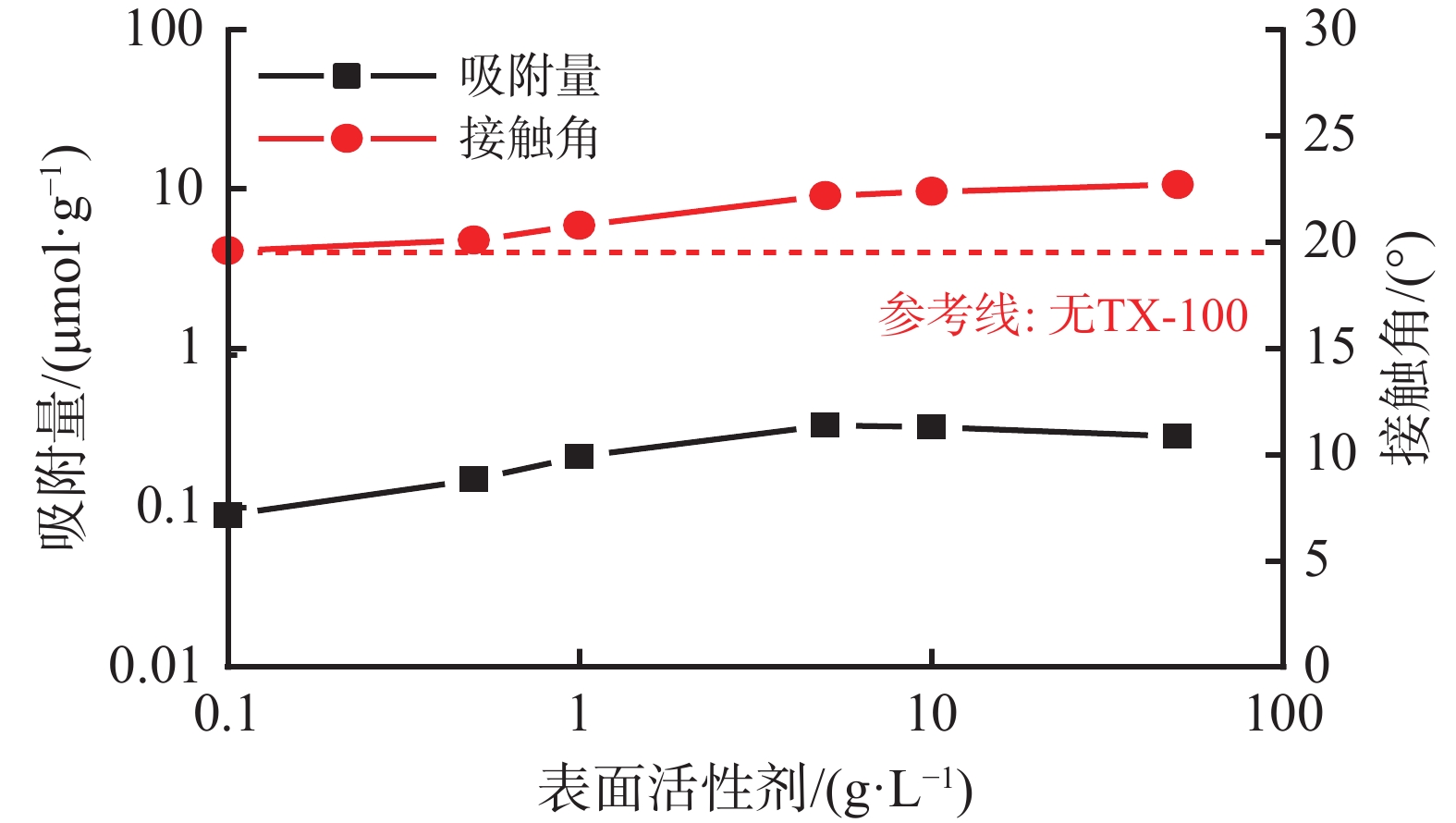
摘要: 油基钻井液清洗是页岩油气等非常规资源勘探开发长期面临的难题,冲洗液是解决该难题的主要手段,但目前冲洗液在界面处的残留特性及其对水泥石影响的研究较少。建立了基于荧光染料染色法定量表征含有机溶剂的冲洗液在套管壁及井壁处残留量的方法,并且分析了残留冲洗液对水泥石力学特性影响规律。研究结果表明,冲洗液在顶替钻井液后油基钻井液残留量少,冲洗液中的有机组分残留量相对更高,且更为粗糙的地层壁面的残留量更多。有机组分会降低界面处水泥石的抗压强度、增大渗透率,但纳米乳液中的油滴较小且粒径分布均匀,可以降低纳米乳液对水泥石微观结构的影响。纳米乳液在水泥浆中的良好稳定性是维持其油滴尺寸小且分布均匀的关键前提,非离子表面活性剂在水泥颗粒上的吸附量较低,降低了水泥颗粒对表面活性剂界面膜稳定性的影响,有利于保证纳米乳液有机相液滴在水泥浆中的稳定性。该研究建立的残留定量分析方法及对水泥石影响规律的认识,可为冲洗液体系的性能评价与优化设计提供科学依据,为深层和非常规油气资源的高效勘探开发提供支撑。Abstract: The cleaning of oil-based drilling fluids is a long-term problem faced with the exploration and development of unconventional resources such as shale oil and gas. Flushing fluid is the primary means to address this problem; however, few studies are conducted currently on the residual characteristics of flushing fluids at the interfaces and their impacts on set cement. A method of quantitatively measuring the amount of organic solvent-contained residual flushing fluids on the casing wall and borehole wall was established based on the fluorescent dye staining technique, and the pattern of how residual flushing fluids influence the mechanical properties of a set cement was analyzed. The research results show that after displacing the oil-based drilling fluid, the amount of the residual oil-based drilling fluid is lower, while the amount of the organic components in the residual flushing fluid is relatively higher, and the amount of these residual organic components is remarkably higher on rougher formation walls. The organic components of the flushing fluid can reduce the compressive strength and increase the permeability of the set cement at the interface of the cement sheath; however, the oil droplets in a nanoemulsion are small and have a uniform particle size distribution, which help mitigate the impact of the nanoemulsion on the microstructure of set cement. The good stability of a nanoemulsion in a cement slurry is a key prerequisite for the oil droplets to have small sizes and uniform distribution. Nonionic surfactants exhibit low adsorption capacity on the surface of cement particles, which reduces the impact of the cement particles on the stability of the interface film of the surfactants, and helps maintain the stability of the organic droplets of the nanoemulsion in a cement slurry. The quantitative method established for residual flushing fluid analysis and the understanding of the pattern how set cement is influenced obtained in this study provide a scientific basis for performance evaluation and optimization design of flushing fluids, as well as support for efficient exploration and development of deep and unconventional oil and gas resources.
-
Key words:
- Flushing fluid /
- Cement sheath interface /
- Evaluation method /
- Set cement /
- Quality of well cementing
-
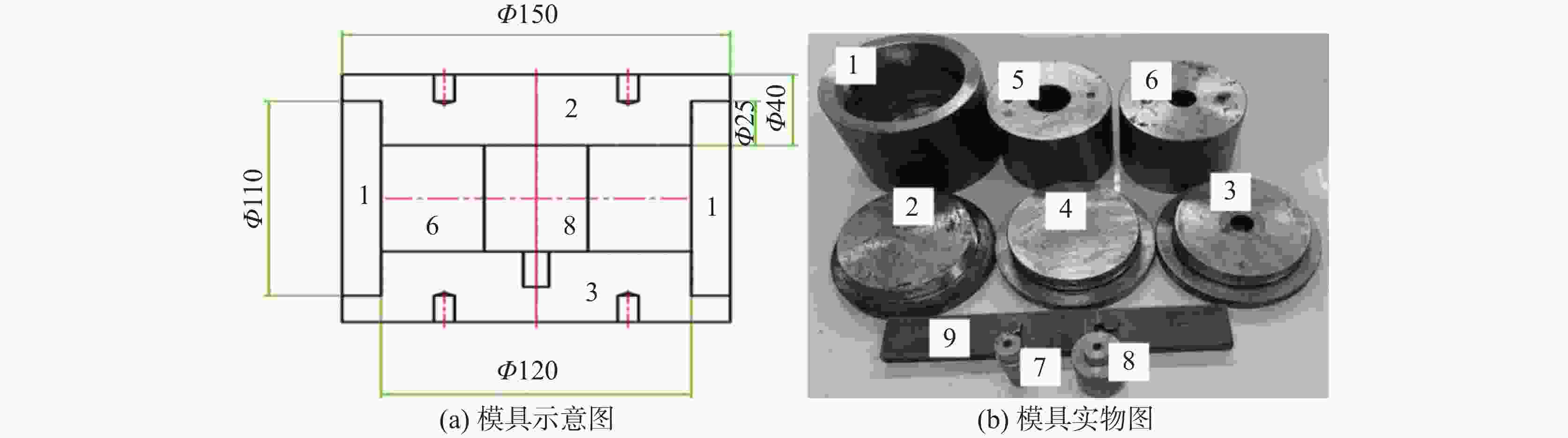
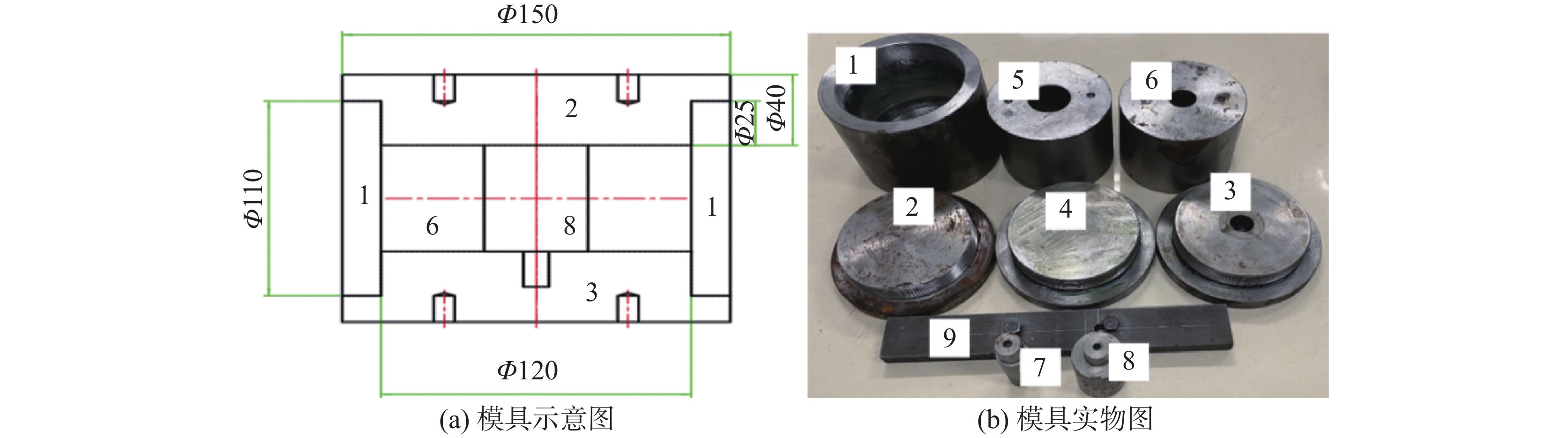
图 1 模拟地层制备装置
注:1-侧壁;2-顶盖;3-基底(用于地层制备);4-基底(用于水泥石配制);5-垫块(大);6-垫块(小);7-填充块(小);8-填充块(大);9-扳手。
表 1 混合液配方
配方 构成比 S-A 水泥浆 S-B 水泥浆∶水=9.5∶0.5 S-C 水泥浆∶水=9.1∶0.9 M-A 水泥浆∶油基钻井液=9.5∶0.5 M-B1 水泥浆∶粗乳液型冲洗液=9.5∶0.5 M-B2 水泥浆∶粗乳液型冲洗液=9.0∶1.0 M-C1 水泥浆∶纳米乳液型冲洗液=9.5∶0.5 M-C2 水泥浆∶纳米乳液型冲洗液=9.0∶1.0  下载: 导出CSV
-
[1] 孙金声, 蒋官澄, 贺垠博, 等. 油基钻井液面临的技术难题与挑战[J]. 中国石油大学学报(自然科学版), 2023, 47(5): 76-89.SUN Jinsheng, JIANG Guancheng, HE Yinbo, et al. Technical difficulties and challenges faced by oil-based drilling fluid[J]. Journal of China University of Petroleum(Edition of Natural Science), 2023, 47(5): 76-89. [2] 齐奉忠, 刘硕琼, 沈吉云. 中国石油固井技术进展及发展建议[J]. 石油科技论坛, 2017, 36(1): 26-31.QI Fengzhong, LIU Shuoqiong, SHEN Jiyun. Suggestions on CNPC cementing technological development[J]. Oil Forum, 2017, 36(1): 26-31. [3] 罗志锋, 李轲, 闫丙森. 油基高密度钻井液污染解堵液体系[J]. 钻井液与完井液, 2025, 42(3): 418-424.LUO Zhifeng, LI Ke, YAN Bingsen. Preparation and application of a block removing fluid for eliminating reservoir contamination by high density oil-based drilling fluids[J]. Drilling Fluid & Completion Fluid, 2025, 42(3): 418-424. [4] ZHANG Z D, SCHERER G W, PROD’HOMME R K, et al. Effect of casing surface roughness on the removal efficiency of non-aqueous drilling fluids[J]. Journal of Natural Gas Science and Engineering, 2018, 51: 155-165. doi: 10.1016/j.jngse.2018.01.004 [5] LI M, OU H J, LI Z Y, et al. Contamination of cement slurries with diesel-based drilling fluids in a shale gas well[J]. Journal of Natural Gas Science and Engineering, 2015, 27(3): 1312-1320. [6] YANG X X, KURU E, GINGRAS M, et al. Characterization of the microstructure of the cement/casing interface using ESEM and Micro-CT scan techniques[J]. SPE Journal, 2020, 26(3): 131-143. [7] 代丹, 王义昕, 邹亦玮, 等. 铝酸三钙和石膏协同对油井水泥浆性能的影响[J]. 钻井液与完井液, 2025, 42(2): 255-261.DAI Dan, WANG Yixin, ZOU Yiwei, et al.Synergistic effects of tricalcium aluminate and gypsum on performance of oil well cement slurries[J]. Drilling Fluid & Completion Fluid, 2025, 42(2): 255-261. [8] TORSÆTER M, TODOROVIC J, LAVROV A. Structure and debonding at cement–steel and cement–rock interfaces: Effect of geometry and materials[J]. Construction and Building Materials, 2015, 96: 164-171. doi: 10.1016/j.conbuildmat.2015.08.005 [9] 刘硕琼, 李德旗, 袁进平, 等. 页岩气井水泥环完整性研究[J]. 天然气工业, 2017, 37(7): 76-82.LIU Shuoqiong, LI Deqi, YUAN Jinping, et al. Cement sheath integrity of shale gas wells: A case study from the Sichuan basin[J]. Natural Gas Industry, 2017, 37(7): 76-82. [10] CHOI M, SCHERER G W, PRUDHOMME R K. Novel methodology to evaluate displacement efficiency of drilling mud using fluorescence in primary cementing[J]. Journal of Petroleum Science and Engineering, 2018, 165: 647-654. doi: 10.1016/j.petrol.2018.03.008 [11] 吴彦先, 赵增新, 巩加芹, 等. 清除井壁滤饼提高固井质量的冲洗液性能影响研究[J]. 钻井液与完井液, 2025, 42(3): 398-405.WU Yanxian, ZHAO Zengxin, GONG Jiaqin, et al.Study on factors affecting properties of flushing fluids for removing mud cakes to improve well cementing quality[J]. Drilling Fluid & Completion Fluid, 2025, 42(3): 398-405. [12] 王中华. 国内钻井液研究应用现状、存在问题与发展建议[J]. 钻井液与完井液, 2025, 42(4): 425-441.WANG Zhonghua. Research and application status, existing problems and development suggestions of drilling fluid in China[J]. Drilling Fluid & Completion Fluid, 2025, 42(4): 425-441. -



 点击查看大图
图(9) / 表(1)
计量
- 文章访问数: 2
- HTML全文浏览量: 1
- PDF下载量: 2
- 被引次数: 0
