



Carbonation-Induced Corrosion Resistance and Mechanism of Ultrafine Slag Contained Oil Well Cement
-
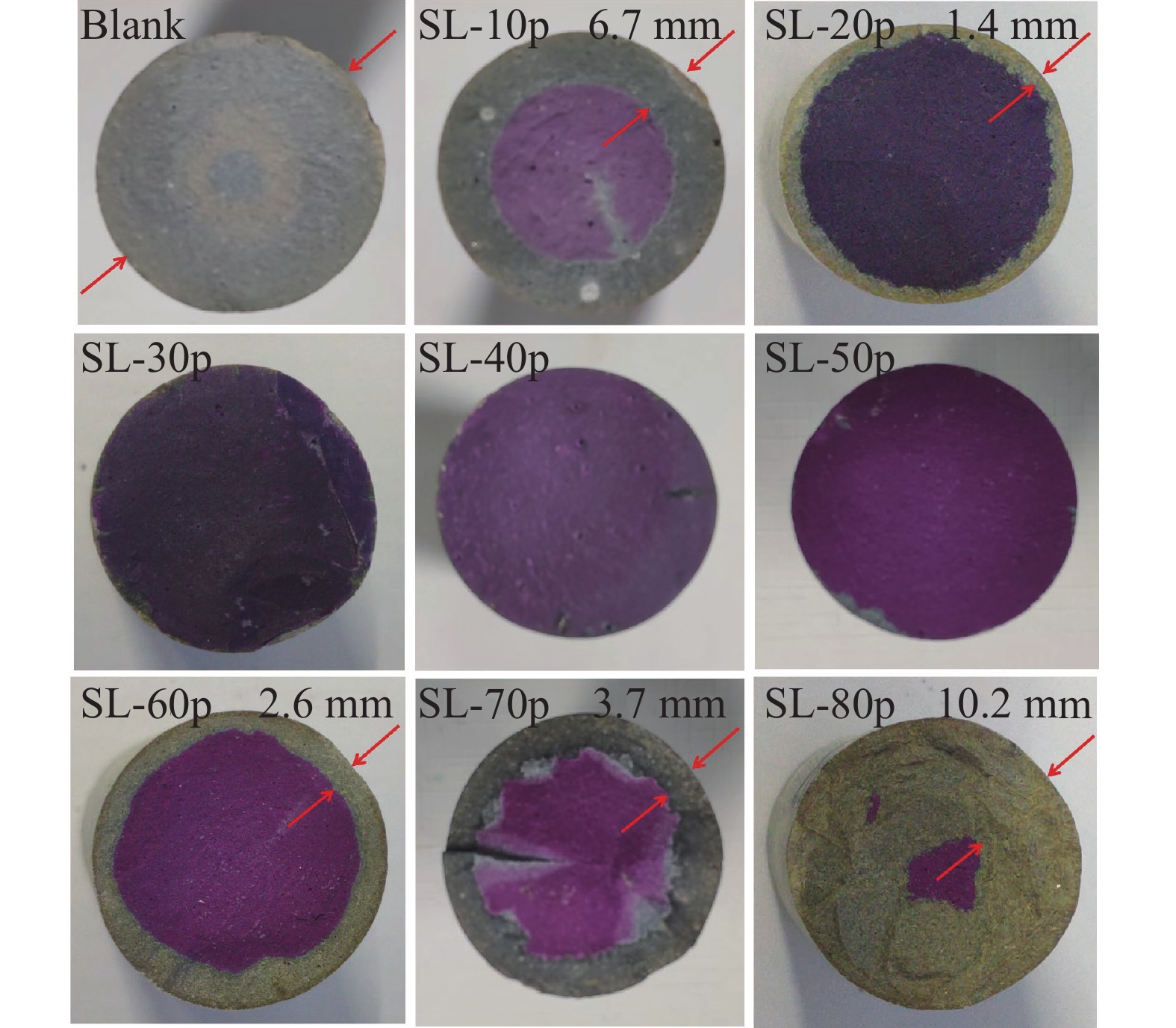
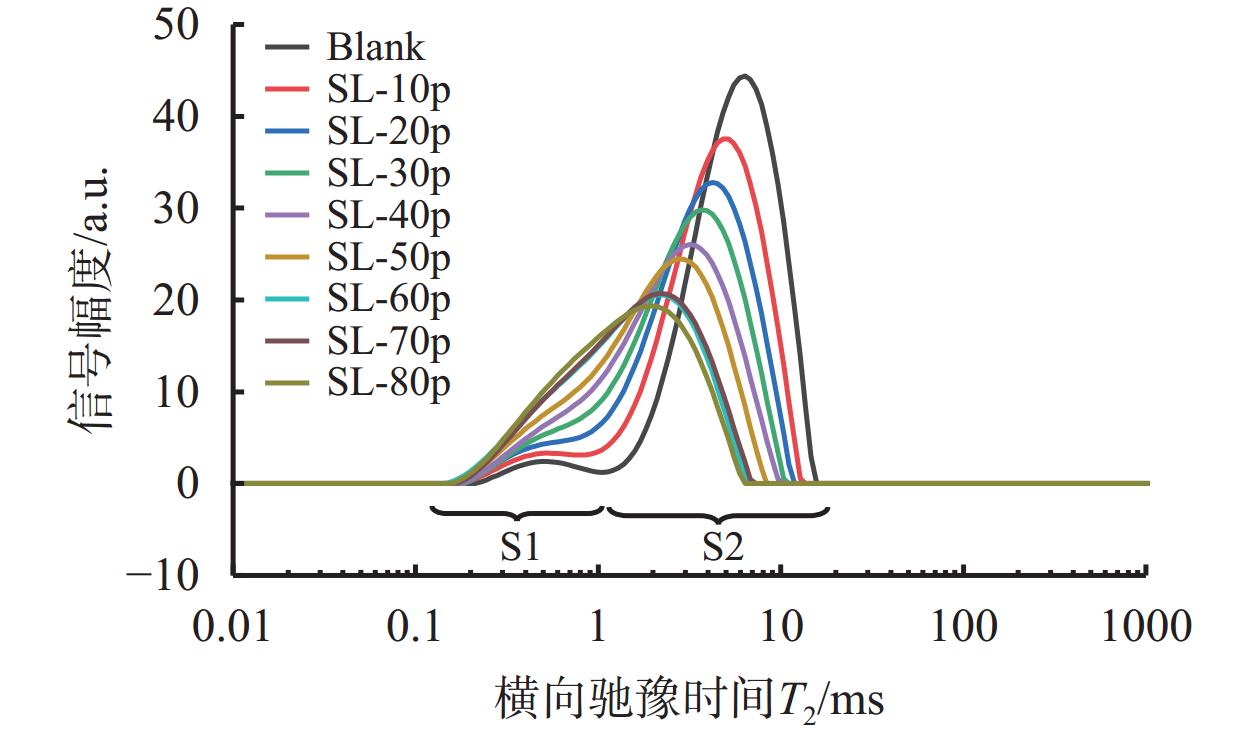
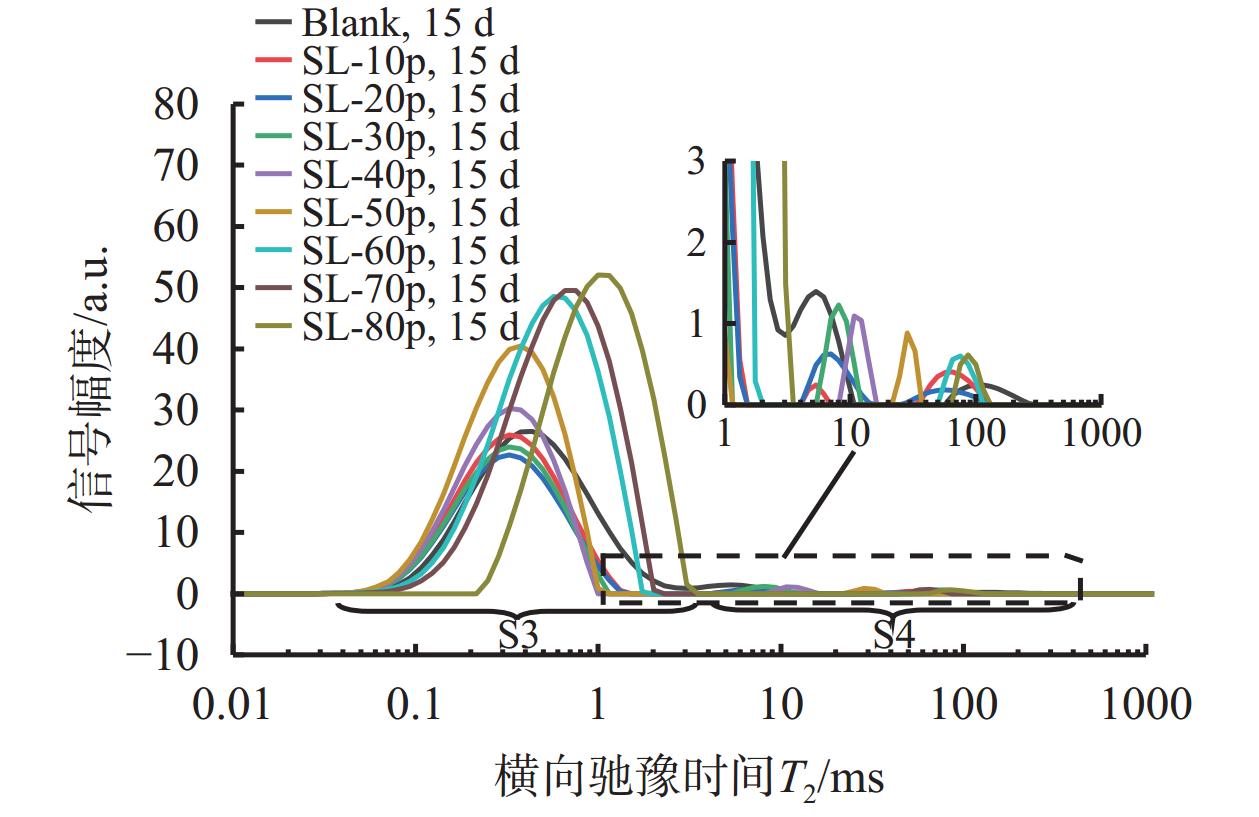
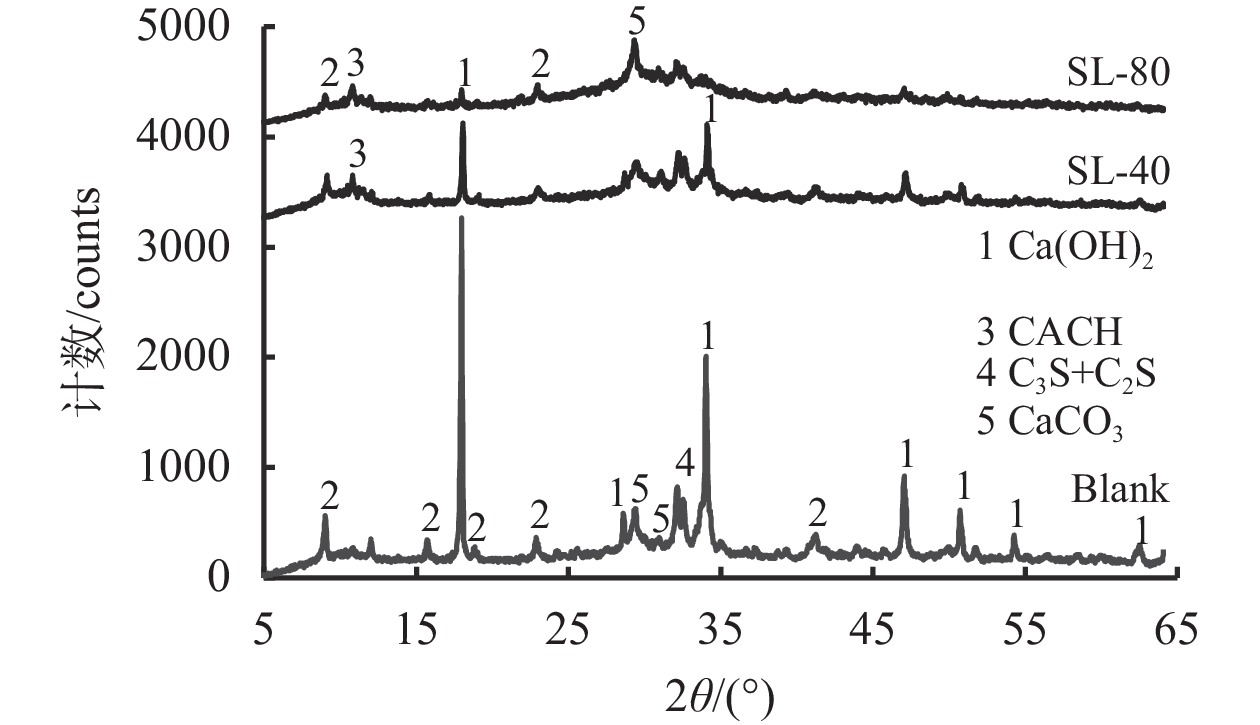
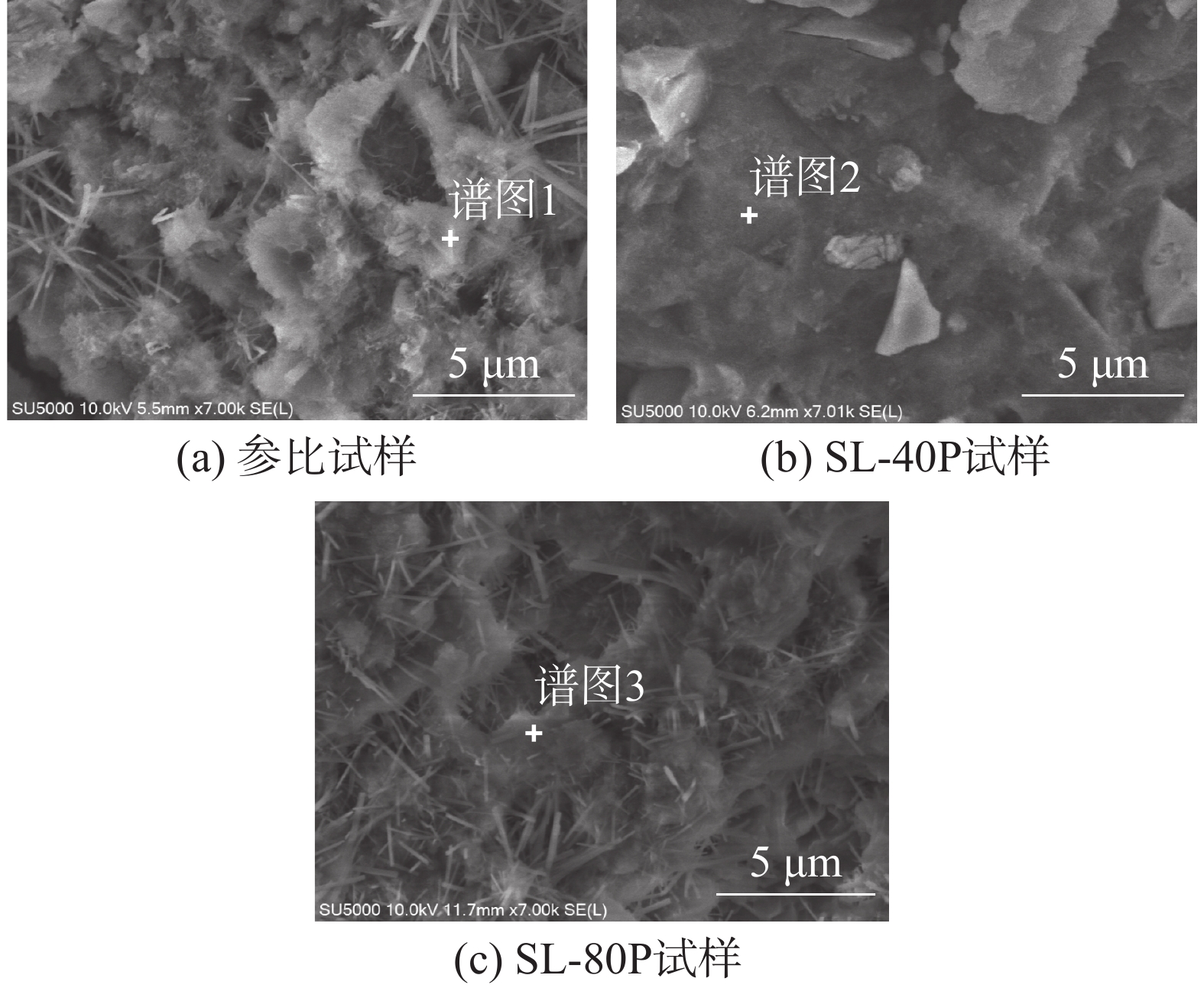
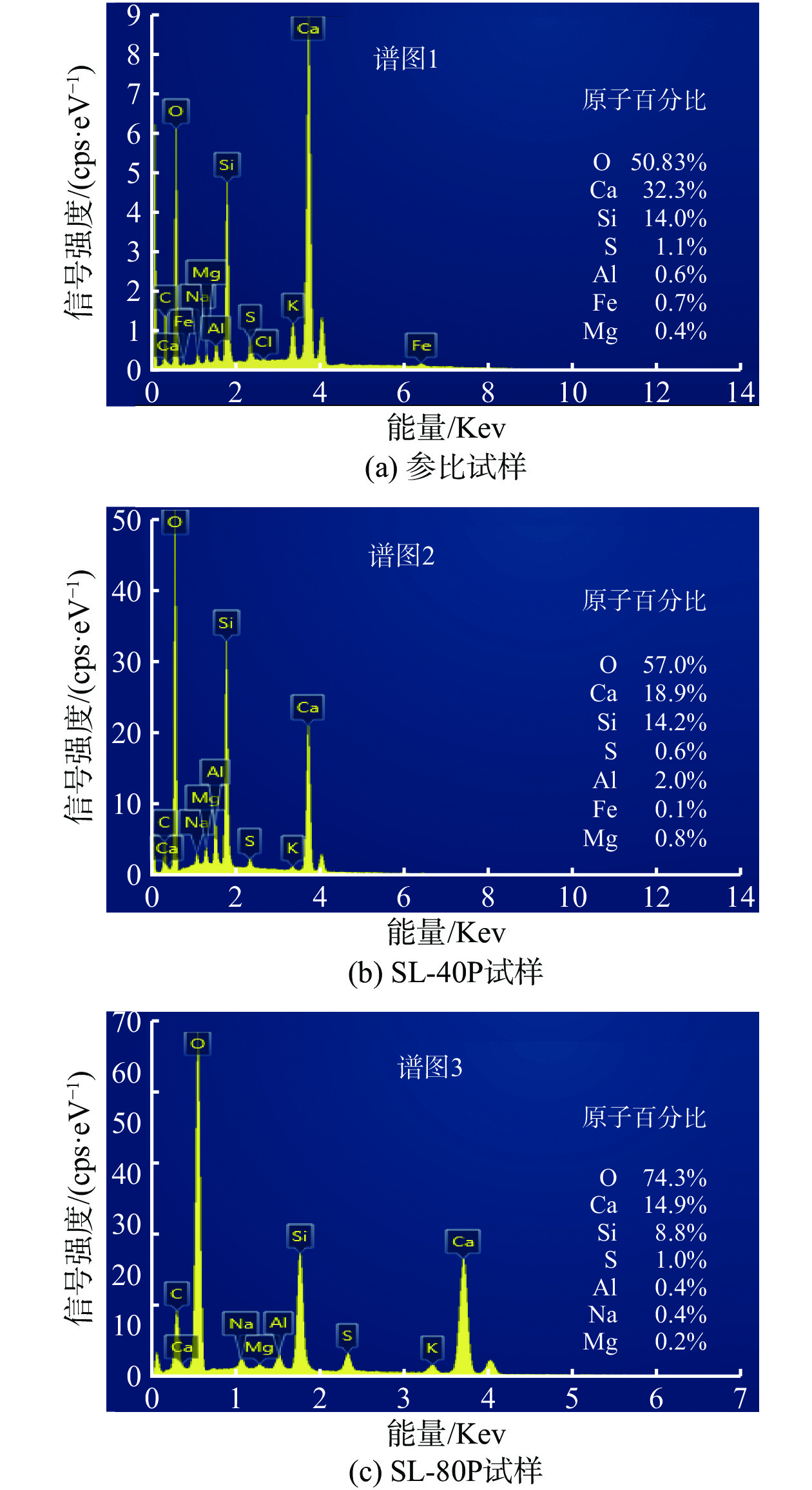
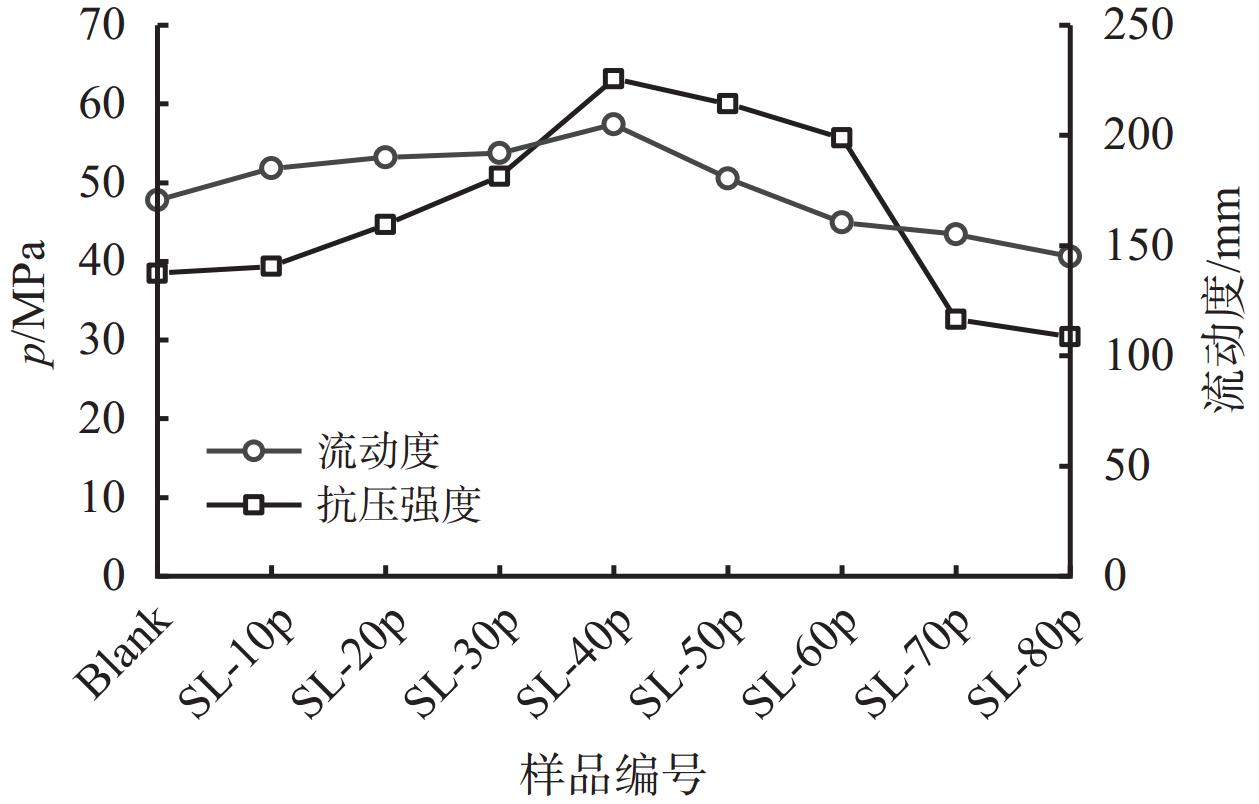
摘要: 为了提高水泥石抗碳化腐蚀能力,测定了以超细矿渣替代油井水泥时水泥浆流动度、水泥石强度及其在超临界CO2环境下碳化腐蚀深度,以确定超细矿渣适宜替代量;并采用了低场核磁、X射线衍射及扫描电镜加能谱分析手段,研究了超细矿渣替代量增加时对水泥石抗碳化腐蚀的影响机理。结果表明,替代量在40%以内有助于增加水泥浆流动度;在替代量递增时,水泥石强度先增大后减小,碳化腐蚀深度先降低后增加。与参比试样对比可知,替代量为10%的试样,凝胶孔明显增多而毛细孔减少;替代量超过50%的试样,凝胶孔减少而毛细孔增多;替代量为30%~50%的试样基本为凝胶孔而无明显毛细孔。将试样孔结构与碳化腐蚀深度相关联,替代量30%~50%的试样未见明显腐蚀,与其无明显毛细孔相关;替代量40%的试样在微观形貌上结构致密、未见明显孔洞,水化产物主要为细茸状、有较低Ca/Si比的CSH凝胶,易腐蚀Ca(OH)2矿相较少。因而,建议超细矿渣适宜替代量为40%左右。Abstract: To improve the ability of set cement to resist carbonation-induced corrosion, the mobility, the strength of set cement and the depth of carbonation-induced corrosion in supercritical CO2 environment were measured of a cement slurry in which ultrafine slag was substituted for oil-well cement. This measurement was aimed to determine the appropriate amount of the slag to substitute cement. Using low-field NMR, XRD and SEM with energy dispersive spectroscopy, the mechanisms with which the substituting ultrafine slag affects the ability of the set cement to resist carbonation-induced corrosion was studied. It was concluded that when the substituting amount of the ultrafine slag is less than 40%, it helps improve the mobility of the cement slurry; when increasing the substituting amount of the ultrafine slag, the strength of the set cement first increases and then decreases, and the depths of the carbonation-induced corrosion first decrease and then increase. Compared with the reference sample, the cement slurry sample with substituting amount of 10% ultrafine slag has more gel pore developed while the number of capillary pores decreases. The cement slurry sample with substituting amount of more than 50% ultrafine slag has less gel pores and more capillary pores. The cement slurry sample with substituting amount of 30%-50% ultrafine slag has basically gel pores and no evident capillary pores. By associating the pore structure of the sample with the depth of the carbonation-induced corrosion, it was found that the sample containing substituting amount of 30%-50% ultrafine slag showed no significant corrosion, and this is relevant to the fact that it has no evident capillary pores. The sample containing substituting amount of 40% ultrafine slag has compact structure and no evident pores in the micromorphology. The hydration product of this sample is mainly fine fluffy-shaped CSH gel with low Ca/Si ratio, and contains less Ca(OH)2 mineral phase which is easily being corroded. Therefore, it is recommended that the appropriate substituting amount of ultrafine slag be around 40%.
-
表 1 G级水泥和超细矿渣SL的理化指标
材料 化学组成/%* 粒度分布/μm ρ/
g·cm−3CaO SiO2 Al2O3 Fe2O3 SO3 D10 D50 D90 G级水泥 63.32 20.97 4.24 4.86 1.75 2.8 26.8 86.2 3.16 超细矿渣SL 40.8 31.8 15.4 0.34 2.44 0.8 3.4 2.44 2.90 材料 矿相组成/%** C3S C2S C3A C4AF f-CaO 方镁石 二水石膏 半水石膏 无水石膏 G级水泥 53.49 24.63 1.59 15.40 0.18 0.60 2.12 0.31 0.12 超细矿渣SL 17°~35°(2θ)呈现较宽弥散峰,表明为无定形结构 注:*采用XRF分析,**采用Rietveld XRD分析。  下载: 导出CSV
表 2 水泥浆配方设计
配方 G级水泥/g 超细矿渣SL/g 混合水/g Blank 100 0 44 SL-10p 90 10 44 SL-20p 80 20 44 SL-30p 70 30 44 SL-40p 60 40 44 SL-50p 50 50 44 SL-60p 40 60 44 SL-70p 30 70 44 SL-80p 20 80 44 注:混合水配方为:100 g自来水+10 g G80L +1.0 g F45L+0.4 g H21L+0.1 g X60L。
下载: 导出CSV
表 3 不同弛豫区间的累积信号幅度占比
试样 累积信号幅度占比/% S0~1
(凝胶孔)S1~10
(小毛细孔)S10~1000
(大毛细孔)Blank 88.3 11.2 0.5 SL-10p 95.4 3.2 1.4 SL-20p 96.9 2.5 0.6 SL-30p 99.2 0.8 0 SL-40p 99.5 0.3 0.2 SL-50p 99.3 0.5 0.2 SL-60p 82.2 17.5 0.3 SL-70p 82.7 16.9 0.4 SL-80p 55.1 44.6 0.3
下载: 导出CSV
-
[1] 郭辛阳, 步玉环, 郭胜来, 等. 耐CO2腐蚀磷铝酸盐固井水泥浆的研制[J]. 钻井液与完井液, 2014, 31(5): 67-70.GUO Xinyang, BU Yuhuan, GUO Shenglai, et al. Development and performance of CO2 resistant compound cementing material[J]. Drilling Fluid & Completion Fluid, 2014, 31(5): 67-70. [2] 马聪, 步玉环, 赵邵彪, 等. 固井用铝酸盐水泥改性试验研究[J]. 建筑材料学报, 2015, 18(1): 100-106.MA Cong, BU Yuhuan, ZHAO Shaobiao, et al. Experimental study on modification of aluminate cement used in oil-well cementing[J]. Journal of Building Materials, 2015, 18(1): 100-106. [3] BAGHERI M, SHARIATIPOUR S M, GANJIAN E. A review of oil well cement alteration in CO2-rich environments[J]. Construction and Building Materials, 2018, 186: 946-968. doi: 10.1016/j.conbuildmat.2018.07.250 [4] 张景富, 王宇, 徐明, 等. 二氧化碳腐蚀对油井水泥石抗压强度的影响[J]. 硅酸盐学报, 2009, 37(4): 642-647.ZHANG Jingfu, WANG Yu, XU Ming, et al. Effect of carbon dioxide corrosion on compressive strength of oilwell cement[J]. Journal of the Chinese Ceramic Society, 2009, 37(4): 642-647. [5] ABID K, GHOLAMI R, CHOATE P, et al. A review on cement degradation under CO2 rich environment of sequestration projects[J]. Journal of Natural Gas Science and Engineering, 2015, 27, part 2: 1149-1157. [6] SANTRA A, REDDY B R, LIANG F, et al. Reaction of CO2 with Portland cement at downhole conditions and the role of pozzolanic supplements[C]//SPE International Symposium on Oilfield Chemistry. The Woodlands, Texas, 2009: SPE-121103-MS. [7] LEDESMA R B, LOPES N F, BACCA K G, et al. Zeolite and fly ash in the composition of oil well cement: Evaluation of degradation by CO2 under geological storage condition[J]. Journal of Petroleum Science and Engineering, 2020, 185: 106656. doi: 10.1016/j.petrol.2019.106656 [8] KUTCHKO B G, STRAZISAR B R, DZOMBAK D A, et al. Degradation of well cement by CO2 under geologic sequestration conditions[J]. Environmental Science & Technology, 2007, 41(13): 4787-4792. [9] 龙丹, 曾雪玲, 赵峰, 等. CCUS环境下温度影响G级油井水泥碳化过程的试验研究[J]. 水泥, 2024(12): 1-4.LONG Dan, ZENG Xueling, ZHAO Feng, et al. Study on the influence of temperature on the carbonation process of G-grade oil well cement in CCUS[J]. Cement, 2024(12): 1-4. [10] XU B H, YUAN B, WANG Y Q, et al. Nanosilica-latex reduction carbonation-induced degradation in cement of CO2 geological storage wells[J]. Journal of Natural Gas Science and Engineering, 2019, 65: 237-247. doi: 10.1016/j.jngse.2019.03.013 [11] LEWIS J S, JONES P J. Well barriers for subterranean storage of Carbon dioxide: US20240218231[P]. 2024-07-04. [12] TIONG M, GHOLAMI R, RAHMAN M E. Cement degradation in CO2 storage sites: a review on potential applications of nanomaterials[J]. Journal of Petroleum Exploration and Production Technology, 2019, 9(1): 329-340. doi: 10.1007/s13202-018-0490-z [13] CLAUSEN J A, KVASSNES A. Cement with reduced permeability: US202117366436[P]. 2021-10-28. [14] 饶志华, 邓成辉, 马倩芸, 等. CCUS井工况下不同引晶材料对水泥石裂缝自愈合过程的影响[J]. 钻井液与完井液, 2023, 40(4): 495-501.RAO Zhihua, DENG Chenghui, MA Qianyun, et al. Comparative study on effects of different crystallographic materials on self-healing of fractures in set cement under CCUS well work conditions[J]. Drilling Fluid & Completion Fluid, 2023, 40(4): 495-501. [15] 武治强, 武广瑷, 幸雪松. CO2腐蚀-应力耦合下固井水泥环密封完整性[J]. 钻井液与完井液, 2024, 41(2): 220-230.WU Zhiqiang, WU Guangai, XING Xuesong. Sealing integrity of cement sheath under the condition of CO2 Corrosion-Stress coupling[J]. Drilling Fluid & Completion Fluid, 2024, 41(2): 220-230. [16] 龚鹏, 程小伟, 武治强, 等. 碳酸钙晶须对CO2诱导固井水泥石裂缝自愈合的影响研究[J]. 材料导报, 2023, 37(7): 67-73.GONG Peng, CHENG Xiaowei, WU Zhiqiang, et al. Research on the effect of Calcium carbonate whiskers on the self-healing of cement stone cracks induced by CO2[J]. Materials Reports, 2023, 37(7): 67-73. [17] 赫英状, 步玉环, 柳华杰. 遇气自愈合水泥浆体系[J]. 钻井液与完井液, 2022, 39(6): 743-747.HE Yingzhuang, BU Yuhuan, LIU Huajie. Research and field test of Self-Healing cement slurry for gas[J]. Drilling Fluid & Completion Fluid, 2022, 39(6): 743-747. [18] 黄新, 袁润章, 龙世宗, 等. 水泥粒径分布对水泥石孔结构与强度的影响[J]. 硅酸盐学报, 2004, 32(7): 888-891.HUANG Xin, YUAN Runzhang, LONG Shizong, et al. Influence of cement particle size distribution on pore structure and strength of cement paste[J]. Journal of the Chinese Ceramic Society, 2004, 32(7): 888-891. [19] 佘安明, 姚武. 基于低场核磁共振技术的水泥浆体孔结构与比表面积的原位表征[J]. 武汉理工大学学报, 2013, 35(10): 11-15.SHE Anming, YAO Wu. Characterization of microstructure and specific surface area of pores in cement paste by low field nuclear magnetic resonance technique[J]. Journal of Wuhan University of Technology, 2013, 35(10): 11-15. [20] 刘卫, 邢立. 核磁共振录井[M]. 北京: 石油工业出版社, 2011.LIU Wei, XING Li. NMR logging[M]. Beijing: Petroleum industry press, 2011. [21] 冯乃谦, 石云兴, 郝挺宇. 矿物质超细粉对水泥浆体的流动性和强度的影响[J]. 济南大学学报(自然科学版), 1998, 12(S1): 103-109.FENG Naiqian, SHI Yunxing, HAO Tingyu. Influence of superfine mineral powder on the fluidity and strength of cement paste[J]. Journal of University of Jinan (Science and Technology), 1998, 12(S1): 103-109. [22] 牛全林, 冯乃谦, 杨静. 矿物质超细粉在水泥粉体中填充效果的分析[J]. 硅酸盐学报, 2004, 32(1): 102-106.NIU Quanlin, FENG Naiqian, YANG Jing. Packing of superfine mineral powder in cement[J]. Journal of the Chinese Ceramic Society, 2004, 32(1): 102-106. [23] SCRIVENER K, SNELLINGS R, LOTHENBACH B. A practical guide to microstructural analysis of cementitious materials[M]. Boca Raton: CRC Press, 2016: 335-339. [24] 李文郁, 尹健昊, 王健, 等. 低场核磁共振技术在水泥基材料中的理论模型及应用[J]. 硅酸盐学报, 2022, 50(11): 2992-3008.LI Wenyu, YIN Jianhao, WANG Jian, et al. Principles and applications of low-field nuclear magnetic resonance in cementitious materials[J]. Journal of the Chinese Ceramic Society, 2022, 50(11): 2992-3008. [25] GORCE J P, MILESTONE N B. Probing the microstructure and water phases in composite cement blends[J]. Cement and Concrete Research, 2007, 37(3): 310-318. doi: 10.1016/j.cemconres.2006.10.007 [26] 刘仍光, 张波, 阎培渝. 软水溶蚀环境中水泥-矿渣复合胶凝材料的浆体结构变化[J]. 硅酸盐学报, 2013, 41(11): 1487-1492.LIU Rengguang, ZHANG Bo, YAN Peiyu. Microstructural variation of hardened cement-slag pastes leached by soft water[J]. Journal of the Chinese Ceramic Society, 2013, 41(11): 1487-1492. [27] 徐晓飞, 汤盛文, 何真. 分子动力学模拟研究钙硅摩尔比对水化硅酸钙结构与力学性能的影响[J]. 硅酸盐通报, 2021, 40(12): 3903-3909.XU Xiaofei, TANG Shengwen, HE Zhen. Effect of Ca/Si ratio on structure and mechanical properties of Calcium silicate hydrate via molecular dynamics simulations[J]. Bulletin of the Chinese Ceramic Society, 2021, 40(12): 3903-3909. [28] 常钧, 房延凤, 李勇. 钙硅比对水化硅酸钙加速碳化的影响[J]. 硅酸盐学报, 2014, 42(11): 1377-1382.CHANG Jun, FANG Yanfeng, LI Yong. Effects of Calcium to Silicon ratios on accelerating carbonation of Calcium silicate hydrate[J]. Journal of the Chinese Ceramic Society, 2014, 42(11): 1377-1382. [29] 祁生文, 郑博文, 路伟, 等. 二氧化碳地质封存选址指标体系及适宜性评价研究[J]. 第四纪研究, 2023, 43(2): 523-550.QI Shengwen, ZHENG Bowen, LU Wei, et al. Investigation of indexes system and suitability evaluation for Carbon dioxide geological storage site[J]. Quaternary Sciences, 2023, 43(2): 523-550. [30] 汤少兵, 李宗要, 谢承斌, 等. 防CO2腐蚀水泥浆在神华CCS示范项目中的应用[J]. 钻井液与完井液, 2011, 28(z1): 17-19.TANG Shaobing, LI Zongyao, XIE Chengbin, et al. Application of CO2 corrosion resistance cement slurry in Shenhua CCS demonstration project[J]. Drilling Fluid & Completion Fluid, 2011, 28(z1): 17-19. [31] 饶志华, 张伟国, 邓成辉, 等. 浅层大位移CO2回注井固井防腐水泥浆体系构建与工程应用[J]. 中国海上油气, 2025, 37(3): 187-193.RAO Zhihua, ZHANG Weiguo, DENG Chenghui, et al. Construction and engineering application of corrosion-resistant cement slurry system for shallow extended-reach CO2 injection well cementing[J]. China Offshore Oil and Gas, 2025, 37(3): 187-193. -

 点击查看大图
图(7) / 表(3)
计量
- 文章访问数: 10
- HTML全文浏览量: 5
- PDF下载量: 0
- 被引次数: 0
